
How to Connect Gutter Downspouts: The Ultimate DIY Guide to Leak-Free Drainage
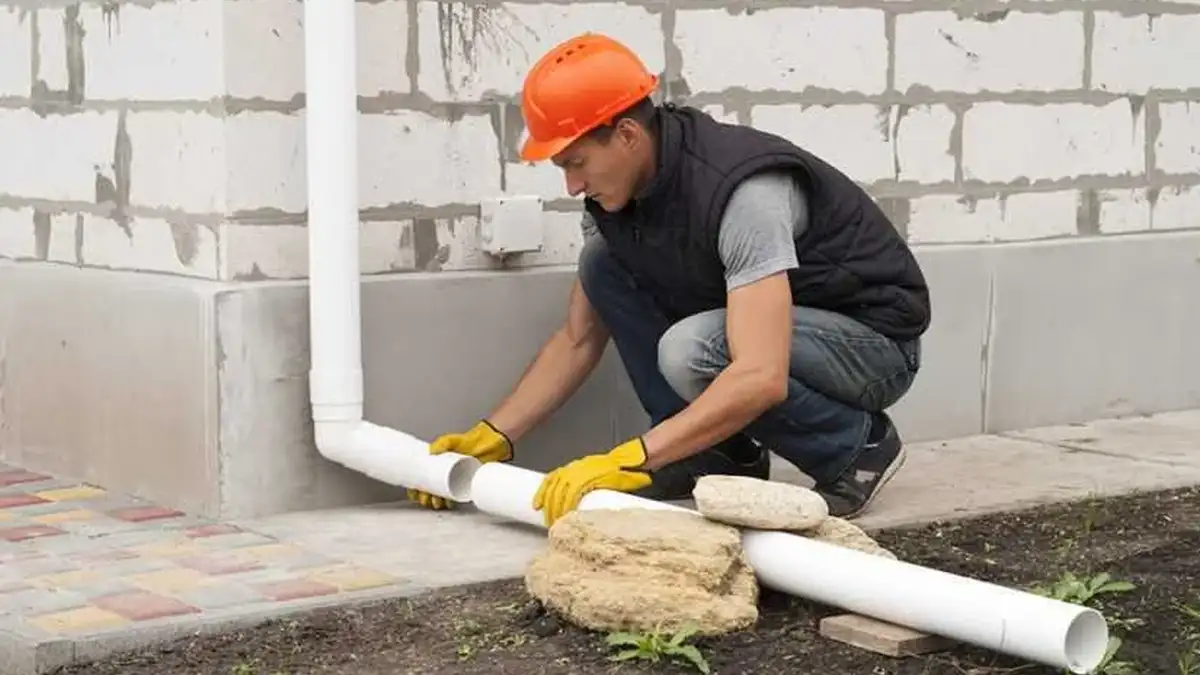
Quick answer: To connect a gutter downspout, cut an outlet hole in the gutter if there is none, fit the outlet, cut the downspout to length, join it to the outlet with elbows where it must change direction, fix it to the wall with brackets, seal the joints and test it with water. Check any stormwater connection first.
A gutter is only as good as the downspout that carries its water away, and most leaks and overflows at the bottom of a system come from a poor connection. This guide covers the whole job, from cutting the outlet hole to the discharge point, so the water leaves your house cleanly.
It also covers how to connect a downspout to a drain pipe, which is drainage work where you should check first. Downspouts are usually called downpipes in New Zealand, and it helps to know when to call a professional on your project.
Why does a proper downspout connection matter?
A proper downspout connection matters because every drop of roof water has to travel through it, and a leak or a loose joint sends that water down the wall or into the ground at your foundation.
- It keeps water away from the foundation: a connected downspout carries water to a safe discharge point instead of letting it pool beside the house.
- It stops erosion: uncontrolled runoff washes soil away from paths, gardens and footings.
- It protects the gutter: a loose or leaking connection stresses the outlet and the joints above it.
- It protects the walls: water from a leaking joint stains and rots cladding and timber.
What do you need to connect a gutter downspout?
You need the downspout and fittings for your system, a way to cut and fix them, sealant and basic safety gear.
- The downspout pipe, elbows, an outlet fitting and brackets that match your gutter system.
- A hacksaw or tin snips, plus a file or sandpaper for the cut edges.
- A drill with a hole saw or a pilot bit, and rivets or screws that suit the material.
- Gutter sealant that suits your gutter material.
- A tape measure, marker and spirit level.
- Gloves, goggles and a stable ladder, set up as the WorkSafe guidance under Sources describes.
How do you cut a downspout hole in a gutter?
You cut a downspout hole by marking the outlet outline, cutting a clean opening that matches the outlet fitting, smoothing the edges and sealing the fitting in place. Many gutters already have an outlet, so only cut one if you are adding or replacing it, and follow our guide to cutting a downspout hole in a gutter for the full steps.
How do you connect a gutter downspout step by step?
Connecting a downspout takes six steps, and each joint should be sealed and fixed before you move on to the next.
- Measure and cut. Measure from the outlet to where the downspout should end, allowing extra where it overlaps a fitting, then cut it square and smooth the edge.
- Attach it to the outlet. Fit the downspout to the outlet and fix the overlap with screws or rivets, then seal the joint with gutter sealant.
- Add elbows. Use an elbow at the top where the pipe has to come in towards the wall, and one at the bottom if the water must be turned away from the house.
- Fix it to the wall. Fit brackets at the intervals in the manufacturer’s instructions, keeping the pipe straight with a level and not crushing it.
- Add an extension or splash block. Direct the discharge away from the foundation, with a slight fall away from the house.
- Test. Run a hose into the gutter, start gently and increase the flow, then check every joint and the discharge point.
If the pipe has to be shortened first, see how to cut a gutter downspout.
How do you connect a downspout to a drain pipe?
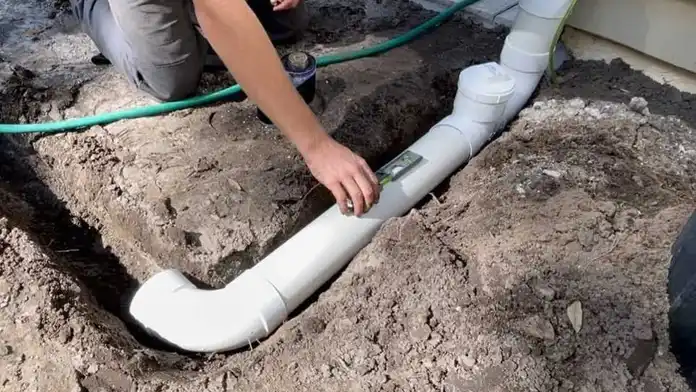
Connecting a downspout to a drain pipe means joining the bottom of the downpipe to an underground stormwater pipe, and because it is drainage work you should check how your property drains before you change anything.
Where a downpipe already discharges into a stormwater connection, keep that connection sealed and clear. Before you add, move or replace a connection, ask a licensed drainlayer or Auckland Council how your property is meant to drain, because stormwater has to be dealt with in line with Building Code clause E1, listed under Sources. Never send roof water onto a neighbour’s land or into the sewer.
Where should a downspout discharge?
A downspout should discharge clear of the foundation, on ground that can take the water away. The right option depends on your site, so check that the water has somewhere to go.
| Option | Suits | Check |
|---|---|---|
| Extension or splash block | Sloping ground that carries water away | The ground must fall away from the house |
| Stormwater connection | Properties with a drain pipe at the downpipe | The connection must be sealed and clear |
| Soakage | Sites where the ground can absorb water | Check this with a professional, because poor soil floods |
The guide to downspout extensions compares extension types.
What mistakes should you avoid?
Most downspout connection problems come from a handful of mistakes that are easy to avoid once you know them.
- Misaligned elbows, which cause water to back up or spill.
- Skipping sealant, because unsealed joints leak under heavy rain.
- Overtightening screws, which can dent metal or crack plastic.
- A discharge that is too close to the house, so water pools at the foundation.
- Fitting a pipe that is too small for the roof area, as the downpipe size guide explains.
When should you call a professional?
Call a professional when the downspout is cracked, rusted or blocked, when drainage is complex on a multi-storey house, when the connection goes into a stormwater pipe or when the whole gutter system is failing.
Our gutter repair service can reconnect, replace or re-route downpipes, and our guide to cleaning gutter downspouts covers the upkeep.
Sources and further reading: WorkSafe: working at height · Building Code clause E1 – surface water (building.govt.nz) · Building Code clause E2 – external moisture (building.govt.nz)
Related guides: gutters vs downpipes · why gutters overflow even when clean
Conclusion
A good downspout connection is cut square, sealed at every joint, fixed firmly to the wall and discharged well clear of the foundation, with the stormwater connection checked before you change it. If the job is high, complex or involves drainage, My Homes Construct Ltd offers a free written quote for your project.
Frequently Asked Questions
How do I cut a downspout hole in a gutter?
Mark the outlet outline over the line of the downspout, drill a pilot hole, cut the opening with a hole saw or snips, file the edges and fit the outlet with sealant and rivets or screws as the manufacturer instructs.
Do I need sealant when connecting a downspout?
Yes. Seal the joint between the outlet and the downspout with a gutter sealant suited to the material, fix the downspout to the wall with brackets, then test the connection with water to check for leaks.
Where should a downspout discharge?
Water should discharge clear of the foundations, using an extension or splash block or a proper stormwater connection, in line with Building Code clause E1 for surface water. Follow the manufacturer’s guidance for your system.
What are the most common downspout connection mistakes?
The most common mistakes are misaligned elbows, skipping sealant, overtightening screws, an extension that is too short and ignoring debris. Keep bends aligned with a level and seal every joint.
Can I connect a downspout to a drain pipe myself?
Ask first. Connecting into a stormwater pipe is drainage work, so check with a licensed drainlayer or Auckland Council how your property drains before you add or change a connection.
When should I call a professional to connect downspouts?
Call a professional if the downspouts are cracked, rusted or blocked, if drainage is complex on a multi-storey home, or if the whole gutter system is failing.
Gutter Help Across Auckland
If this guide raised a question about your own home, the My Homes Construct Ltd team is here to help. We provide professional gutter cleaning, repair and replacement services right across Auckland — North Shore, West Auckland, Central Auckland, East Auckland and South Auckland — along with the surrounding suburbs.
Every enquiry starts with free, no-obligation advice and a written quote. We're a registered building company and back our work with a workmanship warranty as per your quotation, so you can move forward with confidence.
When to Call a Professional
The trickiest part of any gutter cleaning, repair and replacement project is often knowing when to stop and call someone in. Warning signs worth taking seriously include recurring problems, damage that keeps spreading, anything involving safety or access at height, and work that touches the structure of your home.
In those situations a professional opinion pays for itself. We're always happy to take a look and tell you straight whether it's something you can manage yourself or a job better left to a registered building company — with no obligation either way.
Timing It Right in Auckland
Auckland's climate runs to its own calendar, and gutter cleaning, repair and replacement projects go more smoothly when they're scheduled with that in mind. Booking weather-dependent work for a settled stretch avoids delays, and getting preventative jobs done before winter saves you from reacting once the heavy rain and coastal winds arrive.
If you're not sure where your property sits on that timeline, that's exactly the kind of thing a free assessment answers. We'll tell you honestly whether something needs attention now or can sensibly wait until the season suits.
A Quick Checklist for Auckland Homeowners
Whatever you decide to do next, a few simple principles will save you money and stress on any gutter cleaning, repair and replacement job in Auckland.
- Act early — Auckland's wet, humid climate turns small problems into expensive ones faster than most people expect.
- Get it in writing — a clear, itemised written quote protects you and makes comparing options straightforward.
- Check it's a registered building company — it matters for quality, consent and warranty cover.
- Ask about the warranty — reputable Auckland tradespeople stand behind their workmanship, not just the materials.
- Think long-term value, not just the cheapest price — the lowest quote is rarely the best value once durability is factored in.
Keep these in mind and you'll avoid the most common — and most costly — mistakes we see on Auckland properties.
Need Professional Help in Auckland?
My Homes Construct Ltd provides expert gutter and full home-improvement services across all Auckland suburbs. Get a free, no-obligation quote today.
This guide is published by our full range of Auckland home improvement services — a registered Auckland building company covering gutters, roofing, renovation, painting, decks and civil construction.