
Internal Gutter Conversion Auckland: Risks, Costs and Better Alternatives
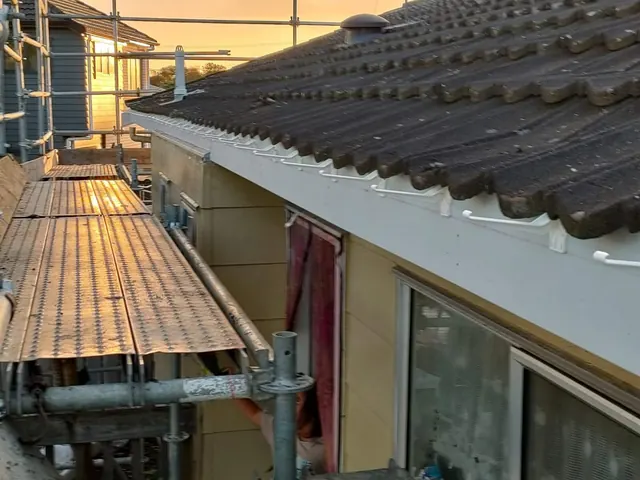
Quick answer: A modern gutter conversion replaces a hidden internal gutter with an external gutter on a new or reworked fascia. It can usually be done without re-roofing, because the work happens at the roof edge. Cost depends on fascia and soffit condition, access and roofline length, so inspect first.
Internal gutters, also called behind-the-fascia or concealed gutters, sit inside the roofline instead of hanging on the outside of it. Because they are hard to see and harder to clean, a blockage or failed joint often goes unnoticed until water is already running into the fascia, soffit or wall framing.
A modern gutter conversion removes that hidden risk by moving the water to an external system. This guide explains the options, what drives the cost, how the work is done on site and how long it takes, using our own Taylor fascia conversion jobs as the real-world reference.
Why do internal gutters cause problems?
Internal gutters cause problems because the channel is built into the roof structure behind the fascia, so debris collects unseen and a failure damages the building instead of simply spilling onto the ground.
Unlike an external gutter, which overflows visibly outside the house, a concealed gutter can overflow backwards into the fascia, soffit or wall framing. The NZ Metal Roofing Manufacturers Code of Practice says the design of a concealed gutter must ensure that water cannot enter the soffit or overflow into the building if the outlet becomes blocked. When an older system no longer meets that standard, conversion is the permanent answer. Our guide to why internal gutters overflow when they are not full explains the causes in more detail.
What are the signs an internal gutter may be failing?
Several signs suggest that an internal gutter is failing, and most of them show up inside the building or on the fascia before anything is visible on the roof.
- Water stains, bubbling paint or damp patches on the fascia or soffit lining.
- Water appearing inside the house near the roofline after heavy rain, even without an obvious external leak.
- Visible rust or corrosion where the internal channel can be seen from the roof or an access point.
- A musty smell in upper rooms that only appears after rain.
- Previous patch repairs to the same section of fascia or ceiling.
Can internal gutters be replaced without re-roofing?
Yes, in most cases internal gutters can be replaced without re-roofing, because a conversion is done from outside the roof edge and the roofing itself normally stays in place.
The exception is rot that has travelled up the rafter ends. If the lower roof sheets or tiles have to be lifted to repair that framing, it becomes part of the scope, which is why the on-site assessment looks for it before a quote is given. Our Taylor fascia rebuild service describes the same approach for fascia-integrated systems, and our Taylor fascia guide for homeowners explains how to tell a repair from a full conversion.
What are the options for a modern gutter conversion?
There are three main ways to deal with an internal gutter, and the table compares them.
| Approach | What it involves | Best for |
|---|---|---|
| Full external conversion | Remove the internal channel, cut back or replace the fascia and soffit as needed, and fit a standard external gutter on a new fascia board | Widespread rot or repeat leaks |
| Fascia-flashing conversion | A custom-folded fascia flashing lets a standard external gutter be fitted without cutting back the soffit | Homes where the soffit contains older materials best left undisturbed |
| Like-for-like internal relining | Reline or reseal the existing internal channel without converting it to an external system | A shorter-term fix, not a permanent solution |
What drives the cost of a modern gutter conversion?
A conversion costs more than a standard gutter replacement because it usually involves fascia work, and sometimes soffit work, as well as the new gutter. These are the main cost drivers.
| Cost driver | Why it matters |
|---|---|
| Length of roofline | Fascia and gutter are priced along the run, so a longer roofline costs more |
| Fascia and soffit condition | Sound boards can be adapted; rotten ones need full replacement |
| Access and scaffolding | Two-storey roofs and steep sites usually need scaffold for safe, straight work |
| Hidden rot | The framing can only be assessed once the old channel is removed |
| Materials | Metal or timber fascia and soffit, and PVC or metal gutter, are priced differently |
Our Taylor fascia rebuild page publishes the starting rate per lineal metre, and a written quote confirms your exact price after the roofline has been inspected.
Which materials should you consider for a conversion?
Older homes being converted often had timber fascia originally, and the choice now is mostly between a metal fascia with a metal gutter and a timber fascia with PVC spouting.
A metal fascia does not rot and does not need repainting, and moving the gutter outside means a future leak drips clear of the house. Timber with PVC spouting can be the better fit on character homes where a metal profile would look wrong. Ask your contractor to itemise the fascia, soffit and gutter and downpipe materials separately so you can compare quotes like for like.
What does the conversion process look like on site?
Once a scope is agreed, most conversions follow the same sequence from safe access through to a water test.
- Make the roof edge safe. Scaffold goes up where needed, in line with WorkSafe’s guidance on working at height.
- Open up and remove the old internal channel. The fascia and roof framing are inspected properly, often for the first time in years.
- Repair any rot found at this stage before anything new goes on.
- Fit the new fascia or fascia flashing, then the external gutter, brackets and downpipes, sized for the roof area.
- Water test and finish. A test confirms the system drains as designed, and timber is primed and painted.
How long does a modern gutter conversion take?
A conversion on a single roofline usually takes a few days, and the main variable is what is found once the old channel comes off.
As a real reference, our two-storey metal fascia and metal gutter conversions in West Harbour and Kumeu each took two days, and a timber fascia with PVC spouting in Greenhithe took three, all from full scaffold. Hidden rot or a larger roofline will take longer, so build some flexibility into your schedule rather than relying on the first quote alone.
What mistakes make internal gutter problems worse?
These mistakes make internal gutter problems worse over time, and each is avoidable.
- Patching or resealing a gutter that already shows repeat leaks, instead of addressing the design problem.
- Not budgeting for fascia and soffit work as part of the gutter quote.
- Choosing the cheapest quote without checking whether it includes full fascia replacement or just a partial patch.
- Disturbing old soffit linings without checking them first. Older buildings can contain asbestos, so do not cut, scrub or drill suspect material and have it tested by a qualified person.
When should you get a professional assessment?
You should get a professional assessment as soon as you suspect an internal gutter is leaking, because the channel is hidden and the damage is only visible once water has reached the timber.
A roofer or guttering specialist can inspect from the roof space or by carefully opening a section of soffit, which is the only reliable way to confirm the extent of hidden damage before agreeing a scope and price. We can inspect your roofline and tell you whether a repair or a conversion is the better route for your project.
Sources and further reading: WorkSafe: working at height · Building Code clause E1 – surface water (building.govt.nz) · Building Code clause E2 – external moisture (building.govt.nz) · NZ Metal Roofing Manufacturers Code of Practice: gutters
Related guides: Taylor fascia rebuild for Auckland homeowners · how to rehab an old box gutter · gutter services in Auckland
Conclusion
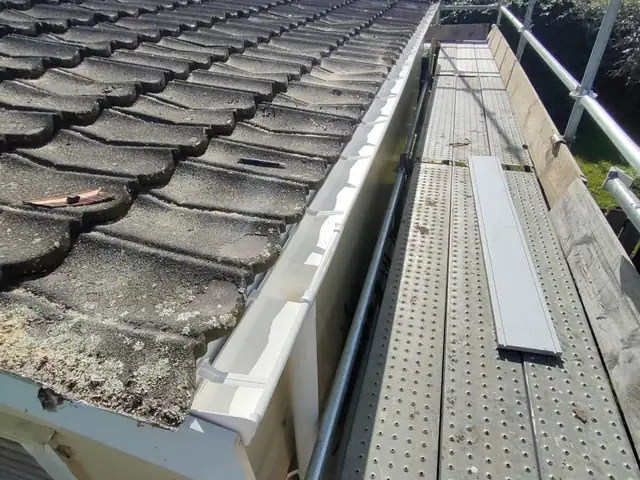
A modern gutter conversion removes the ongoing risk of unseen internal leaks by moving the water outside the roofline, usually without re-roofing. Getting a proper roof-space inspection before finalising a quote avoids surprises once the old channel is opened up, and keeps your project on schedule.
Frequently Asked Questions
What is an internal (fascia) gutter system?
It is a guttering channel built into the roof structure behind the fascia board, rather than hanging on the outside of it. Because it is concealed, blockages and leaks are harder to spot than with an external gutter.
Why do internal gutters fail more often than external ones?
Because the channel is hidden inside the roofline, blockages and joint failures are harder to spot, so problems often reach the fascia, soffit or wall framing before anyone notices, unlike an external gutter, which usually just overflows visibly onto the ground.
Can internal gutters be replaced without re-roofing?
In most cases, yes. A conversion is done from outside the roof edge, so the roofing normally stays in place. Roofing only comes into it if rot has travelled far enough up the rafter ends to need lower sheets or tiles lifted.
Does converting to external guttering always involve replacing the fascia?
Usually, yes, since the old internal channel sits where the fascia needs to change to accept an external gutter. Some conversions use a custom fascia flashing to avoid disturbing the soffit, particularly where older soffit material is best left undisturbed.
How do I know if my Auckland home has an internal gutter?
From the ground, the roofline will look continuous with no visible external gutter hanging below the roof edge. A roofer or guttering specialist can confirm this quickly during an inspection.
Gutter Help Across Auckland
If this guide raised a question about your own home, the My Homes Construct Ltd team is here to help. We provide professional gutter cleaning, repair and replacement services right across Auckland — North Shore, West Auckland, Central Auckland, East Auckland and South Auckland — along with the surrounding suburbs.
Every enquiry starts with free, no-obligation advice and a written quote. We're a registered building company and back our work with a workmanship warranty as per your quotation, so you can move forward with confidence.
When to Call a Professional
Plenty of gutter cleaning, repair and replacement tasks are fine to tackle yourself, but it's worth knowing where the line is. If a job involves working at height, structural elements, water getting where it shouldn't, or anything you're not fully confident about, bringing in a professional is usually cheaper than fixing a DIY attempt that didn't hold up.
A good tradesperson also spots the things an untrained eye misses — the early warning signs that turn a small job today into a major repair next winter. If you're in any doubt, a free assessment costs nothing and gives you a clear, honest picture before you commit to anything.
Timing It Right in Auckland
Timing matters more than most Auckland homeowners realise with gutter cleaning, repair and replacement work. The drier spells from late spring through summer are ideal for anything weather-sensitive, while the wetter winter months are when hidden faults tend to reveal themselves — which makes autumn a smart time for a preventative check before the rain sets in.
Planning ahead also means you're not scrambling for an emergency call-out at the worst possible moment. A quick seasonal inspection costs little and often catches the small issues that would otherwise become urgent — and expensive — repairs once Auckland's weather turns.
A Quick Checklist for Auckland Homeowners
Whatever you decide to do next, a few simple principles will save you money and stress on any gutter cleaning, repair and replacement job in Auckland.
- Act early — Auckland's wet, humid climate turns small problems into expensive ones faster than most people expect.
- Get it in writing — a clear, itemised written quote protects you and makes comparing options straightforward.
- Check it's a registered building company — it matters for quality, consent and warranty cover.
- Ask about the warranty — reputable Auckland tradespeople stand behind their workmanship, not just the materials.
- Think long-term value, not just the cheapest price — the lowest quote is rarely the best value once durability is factored in.
Keep these in mind and you'll avoid the most common — and most costly — mistakes we see on Auckland properties.
Need Professional Help in Auckland?
My Homes Construct Ltd provides expert gutter and full home-improvement services across all Auckland suburbs. Get a free, no-obligation quote today.
This guide is published by registered Auckland builders — a registered Auckland building company covering gutters, roofing, renovation, painting, decks and civil construction.