
How to Renovate for Better Indoor-Outdoor Living in Auckland
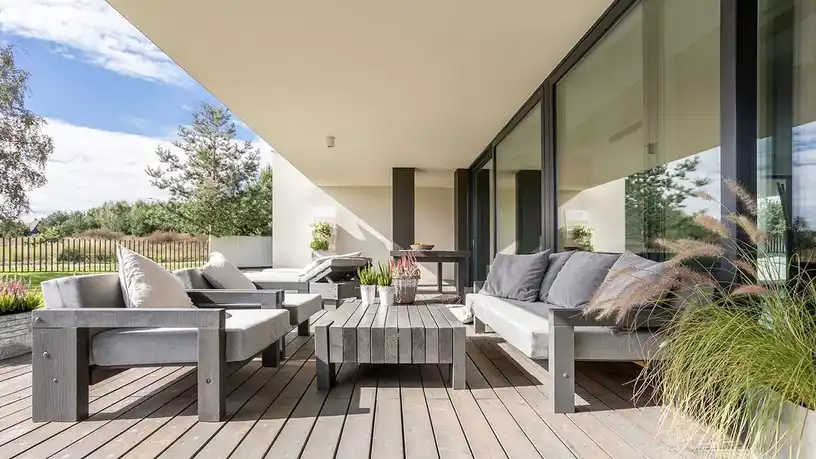
Quick answer: To renovate for better indoor-outdoor living in Auckland, assess how your home connects to the outdoors, install large bifold or sliding doors, match indoor and outdoor flooring, define outdoor rooms, add lighting, power and heating, and plan privacy and shelter. Check council consent rules before building a deck or covered area.
Auckland’s temperate climate and love of outdoor living make a seamless link between house and garden worth planning for. This guide walks through six steps, from doors and flooring to lighting, privacy and shelter, and the mistakes that cause problems later.
Why does indoor-outdoor living suit Auckland homes?
Auckland’s laid-back, outdoor-centric lifestyle makes a strong link between house and garden a priority for many homeowners. Whether the home is a villa or a modern build, a well-designed renovation can transform the space. Here is why it matters:
- Auckland’s climate: mild winters and sunny summers suit outdoor entertaining spaces for much of the year.
- Changing lifestyles: remote work and family-focused living have driven demand for open-plan renovations and alfresco dining areas that blend indoors with outdoors.
How do you renovate for indoor-outdoor living in Auckland?
The first step is to assess how your home connects to the outdoors today, because the best layout builds on the routes and light you already have. Start by looking at three things:
- Traffic flow: identify high-traffic routes, such as kitchen to patio, that suit an open-plan kitchen and deck connection.
- Natural light: maximise north-facing windows or doors to capture Auckland’s sunlight.
- Ventilation: make sure the new openings keep good airflow, which helps with humidity.
The five steps below build on that assessment: doors, flooring, outdoor rooms, lighting and heating, and privacy and shelter.
Which doors work best for indoor-outdoor flow?
Large openings create the seamless transition between inside and out, and the right door type depends on how much space you have.
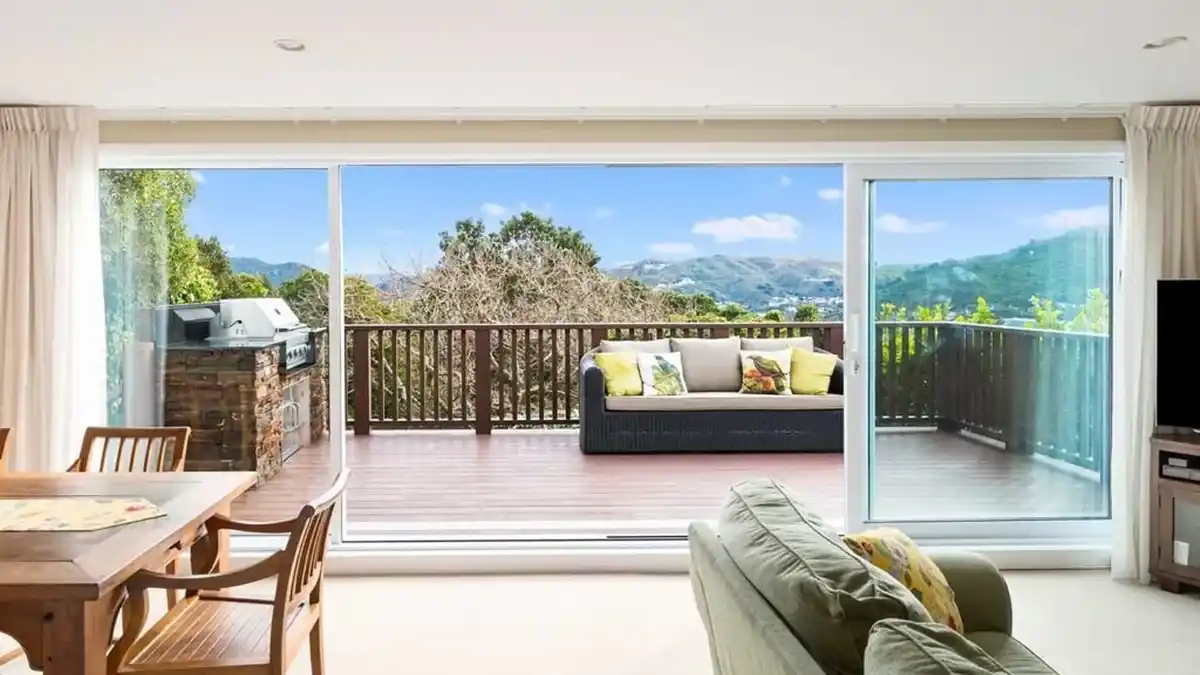
- Bifold doors: fold away for wide openings, ideal for entertaining.
- Stacking sliders: space-saving sliding doors suit smaller homes.
- Pivot doors: modern, bold options for high-end designs.
- Materials: aluminium frames with double glazing are a common choice because they resist Auckland’s salt air. Confirm that the product you choose meets the Building Code.
Choose weatherproof outdoor spaces with UV-resistant coatings for durability.
How do you match indoor and outdoor flooring?
Consistent flooring and finishes make the inside and outside read as one space, and weather-resistant finishes keep the outdoor half durable.
- Continuity: use tiles or timber-look composite from the living areas out to the deck.
- Weather-resistant finishes: use deck waterproofing products such as epoxy coatings, or sealed timber.
Our guide to timber vs composite decking in Auckland compares the two main options.
How do you create outdoor rooms?
Defining separate zones outdoors makes the space easier to use, just as rooms do inside the house.
- Dining zone: add a table under a pergola for alfresco dining.
- Lounging zone: include weatherproof sofas or built-in seating.
- Cooking zone: install an outdoor kitchen with a BBQ or pizza oven.
If you are planning a pergola, see our pergola building guide for homeowners.
What lighting, power and heating does an outdoor area need?
A few well-chosen additions make an outdoor area usable after dark and through cooler months.
- Lighting: solar or low-voltage LEDs for pathways and ambience.
- Power points: add weatherproof outlets for appliances or charging, installed by a licensed electrician.
- Heating: gas heaters or fire pits extend use through the year. Follow the manufacturer’s instructions on clearances and ventilation.
How do you add privacy and shelter?
Privacy and shelter decide how comfortable an outdoor space feels in practice, particularly on exposed or coastal sites.
- Privacy: use privacy screening for decks, such as timber slats or native planting.
- Shelter: install louvre roofs or retractable awnings for rain and wind protection.
- Wind protection: use glass balustrades or hedging in exposed coastal areas.
What mistakes should you avoid when renovating for indoor-outdoor living?
A successful indoor-outdoor living renovation needs careful planning, and these are the mistakes and tips that matter most:
- Mistake: ignoring drainage: poor deck drainage causes water pooling, risking rot and council problems.
- Mistake: mismatched styles: avoid clashing indoor and outdoor looks, such as modern indoors with rustic decking.
- Mistake: non-durable finishes: cheap coatings fade, so use proper deck waterproofing products.
- Tip: design for use: plan around morning sun (north-facing decks) or evening entertaining.
- Tip: landscaping: soften transitions with landscape design using native plants such as pohutukawa.
- Tip: hire experts: an experienced Auckland renovation contractor can check council consent requirements for outdoor spaces.
Sources and further reading: building.govt.nz: apply for a building consent · building.govt.nz: check if you need a building consent
Related guides: deck building consent in Auckland · new deck builds in Auckland · Home Renovation Auckland · the cost calculator
Conclusion
Renovating for indoor-outdoor living in Auckland works best when doors, flooring, shelter and drainage are planned together so the house and outdoor area feel like one space. A good next step is to check council consent rules for any deck or covered area, then ask My Homes Construct Ltd for a free quote.
Frequently Asked Questions
Do I need council consent to build an outdoor living area in Auckland?
A deck higher than 1.5m above the ground generally needs building consent, and a safety barrier is required wherever the fall height is 1m or more. Other structures, such as a covered area, have their own rules, so check Auckland Council or building.govt.nz first.
What’s the best door type for indoor-outdoor flow?
Bifold doors give wide openings for entertaining, while stacking or sliding doors save space in smaller homes. Aluminium frames with double glazing are a common choice because they cope with salt air; confirm the product meets the Building Code.
How much does it cost to renovate for indoor-outdoor living?
Cost depends on the scope: doors, decking, a pergola or covered area, lighting and landscaping are priced separately. Our cost calculator gives a typical price range for a new deck, and a free quote confirms the figure for your home.
Why does deck drainage matter for indoor-outdoor living?
Poor drainage lets water pool on the deck, which risks rot, so plan the falls and drainage as part of the design rather than trying to fix them later.
Home Renovation Help Across Auckland
Reading up is a smart first step, but every Auckland property is a little different. For advice tailored to your own home, My Homes Construct Ltd offers free assessments and written quotes for home renovation across all Auckland regions and suburbs.
We respond to enquiries the same business day, explain your options in plain language, and stand behind every job with a workmanship warranty — no pressure and no hidden costs.
When to Call a Professional
Plenty of home renovation tasks are fine to tackle yourself, but it's worth knowing where the line is. If a job involves working at height, structural elements, water getting where it shouldn't, or anything you're not fully confident about, bringing in a professional is usually cheaper than fixing a DIY attempt that didn't hold up.
A good tradesperson also spots the things an untrained eye misses — the early warning signs that turn a small job today into a major repair next winter. If you're in any doubt, a free assessment costs nothing and gives you a clear, honest picture before you commit to anything.
Timing It Right in Auckland
One thing worth keeping in mind with home renovation in Auckland is how much the seasons shape the right approach. Coastal exposure, humidity and sudden downpours all affect both the work itself and how long the result lasts, so the best time to act isn't always obvious from the kerb.
Booking early in the season also means more flexibility on dates and fewer surprises. We're happy to map out sensible timing with you at no cost, so the job lands when conditions — and your budget — are right.
A Quick Checklist for Auckland Homeowners
Whatever you decide to do next, a few simple principles will save you money and stress on any home renovation job in Auckland.
- Act early — Auckland's wet, humid climate turns small problems into expensive ones faster than most people expect.
- Get it in writing — a clear, itemised written quote protects you and makes comparing options straightforward.
- Check it's a registered building company — it matters for quality, consent and warranty cover.
- Ask about the warranty — reputable Auckland tradespeople stand behind their workmanship, not just the materials.
- Think long-term value, not just the cheapest price — the lowest quote is rarely the best value once durability is factored in.
Keep these in mind and you'll avoid the most common — and most costly — mistakes we see on Auckland properties.
Need Professional Help in Auckland?
My Homes Construct Ltd provides expert home renovation and full home-improvement services across all Auckland suburbs. Get a free, no-obligation quote today.
This guide is published by Auckland construction and home renovation company — a registered Auckland building company covering gutters, roofing, renovation, painting, decks and civil construction.