
Taylor Fascia Rebuild for Auckland Homeowners
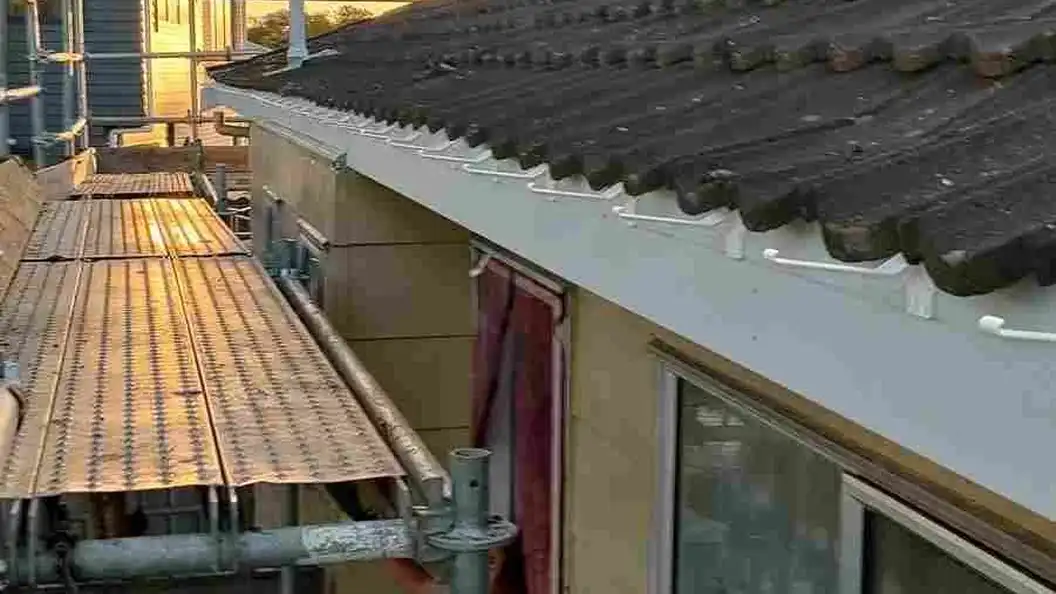
Quick answer: Taylor fascia is a fascia-and-spouting system where the gutter forms part of the fascia line, and Auckland’s rain and humidity are hard on it. Rebuild and conversion work starts at $280 per lineal metre, quoted separately from spouting; repair suits isolated damage, while a full conversion suits widespread rot.
Taylor fascia refers to a specific type of fascia system designed to provide robust and long-lasting protection for homes. This system is particularly popular in Auckland due to its durability and effectiveness in managing the unique weather conditions in the region. Fascia boards serve as the vertical finishing edge that caps the ends of rafters outside a building, often holding the guttering system.
What Taylor Fascia Is, and Why It Fails
Taylor fascia is a fascia-and-spouting system in which the gutter is formed as part of the fascia line rather than hung off it. It was fitted on Auckland homes because it gives a clean, continuous roofline edge, and plenty of those systems are still doing their job.
The fascia itself is the vertical board that caps the ends of the rafters. It carries two loads at once: it holds the guttering, and it closes off the lower edge of the roof structure against weather and pests. When it goes, both jobs stop being done at the same time.
Auckland is hard on that board. Constant rain, humidity, wind-driven water and UV work on the same edge year after year, and the face that suffers most is the one you cannot see — the back, where the gutter holds moisture against the timber. That is why a fascia can look sound from the driveway and be soft along its whole length.
Once it fails, the damage does not stay at the roofline:
- Water damage: leaks and overflow let water track into the wall framing and down to the foundation.
- Mould and mildew: persistent moisture in an enclosed cavity is exactly the condition mould needs.
- Structural damage: rot spreads from the board into the rafter ends it is fixed to, which turns a roofline repair into a framing repair.
The Two Ways a Taylor Fascia System Actually Fails
In practice we are called out for one of two things, and they need different answers.
1. Internal gutter leaks. Because the gutter is integrated into the fascia line, a failed joint or a corroded section does not drip clear of the house the way an external spouting leak does — it discharges behind the fascia, into the cavity. Homeowners usually notice the stain on a ceiling or soffit long before they notice anything at the roofline. This is the failure mode that does the expensive damage, precisely because it is hidden.
2. Overflow. Klass-style and internal gutter profiles move water efficiently when they are clear, but they tolerate less debris than a deep external gutter. Once an outlet blocks, the run backs up and spills over the rear edge rather than the front — again, into the structure rather than away from it. Regular clearing prevents most of this; a run that overflows when it is clean has a fall or capacity problem, not a debris problem.
Both are worth acting on quickly. The cost difference between catching a Taylor fascia problem at the roofline and catching it after it has reached the framing is the single biggest variable in the whole job.
Repair or Full Conversion — How to Tell Which You Need
Not every failing fascia needs replacing. We quote targeted repair when the damage is genuinely isolated, and a full rebuild or conversion when it is not. The dividing line is whether the underlying structure is still sound.
A repair is the right call when:
- Only one or two sections are damaged
- The damage is superficial — cracks or chips rather than rot
- The boards are less than 10 years old
- The rest of the fascia line is in good condition
A complete rebuild or conversion is the better long-term answer when:
- Multiple sections are rotted or damaged
- The boards are 15–20+ years old
- Water is already getting into the walls or roof cavity
- You are moving from an internal gutter system to an external one
That last point is the one most homeowners have not considered. If the fascia has to come off anyway, converting to an external metal fascia and gutter at the same time costs far less than doing it as a separate job later, and it removes the hidden-leak failure mode entirely. See Taylor fascia repair and rebuild for what each option covers.
What a Taylor Fascia Conversion Costs in Auckland (2026)
Taylor fascia rebuild and conversion work starts at $280 per lineal metre. That is the rate for the roofline itself — stripping the old system, assessing the rafter ends underneath, fixing the new fascia and re-hanging the gutter to the correct fall.
It is priced per lineal metre rather than as a house total because the only number that matters is how much roofline you actually have, and that varies far more between houses than the rate does. It is also quoted separately from spouting: they are different scopes of work, and bundling them into one figure hides which part of your quote is which.
Three things move a job above the starting rate:
- Rot found in the rafter ends. This is only visible once the old board is off, which is why an honest quote states what happens if it is found rather than pretending it will not be.
- Access. A single-storey run worked off ladders and a two-storey run needing full scaffold are not the same job.
- What replaces it. A metal fascia with matching metal gutter, or a timber fascia with PVC spouting, carry different material and labour costs.
The final rate is always set by a free on-site assessment — nobody can price a roofline properly from a photograph.
A Two-Storey Conversion in Kumeu: What the Job Involved
A recent job in Kumeu is a fair illustration of the full-conversion route. The house was a two-storey plastered home with a metal roof, still running its original Taylor fascia system.
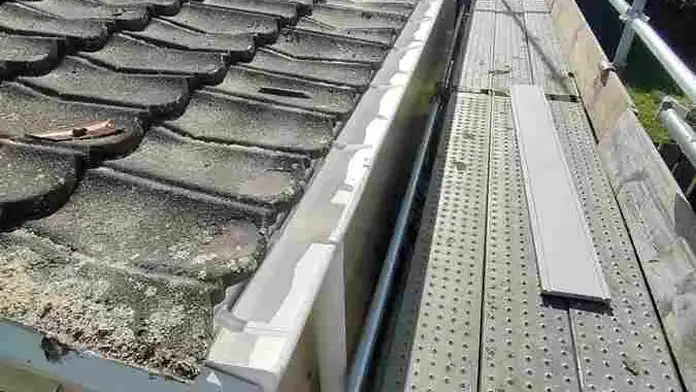
The existing fascia was stripped and converted to a metal fascia with a new metal gutter and downpipes — a complete change of system rather than a like-for-like board swap. Because the roofline sits two storeys up and runs the full width of a plastered wall, the whole job was carried out from full scaffold rather than ladders. That is a real cost line, but it is also what makes it possible to fix the new fascia straight and to coat the faces that become unreachable the moment the gutter is hung.
Time on site: two days.
Two days is typical for a metal-to-metal conversion on a two-storey home — we completed a comparable job in West Harbour in the same time. A timber fascia with PVC spouting takes longer; a Greenhithe conversion on that specification ran to three days.
The photographs and full scope are on the Kumeu Taylor fascia conversion case study, and the job is published alongside the rest of our work in the area on our Home Renovations & Builders Kumeu page.
Keeping the New Roofline Sound
A converted roofline needs far less attention than what it replaced, but it is not maintenance-free. Four habits keep it sound:
- Inspect twice a year. Once before winter, once after. You are looking for tilted brackets, staining below the gutter line and any movement in the fascia.
- Clear the gutters annually. More often under overhanging trees. Most gutter failures start as a blocked outlet, not a failed gutter.
- Keep timber coated. If you have gone with a timber fascia, the paint film is the waterproofing. A metal fascia does not need this.
- Fix small things immediately. A loose bracket is a ten-minute job. The rot it causes if left is not.
If you want a second opinion before committing to anything, we will inspect the roofline and tell you honestly whether you are looking at a repair or a rebuild. Call 022 315 8987 or get in touch for a free assessment and quote.
Sources and further reading: WorkSafe: working at height · Building Code clause E1 – surface water (building.govt.nz) · Building Code clause E2 – external moisture (building.govt.nz)
Related guides and services: 5 Reasons You Need to Consider Taylor Fascia Rebuild · internal Gutter Conversion Auckland
Conclusion
Taylor fascia is not a defective system — it is an ageing one, and the houses that have it are now reaching the point where the original roofline is at the end of its service life. That is a decision point, not an emergency.
The thing worth getting right is the diagnosis. A genuinely isolated fault is a repair, and paying for a full rebuild is money wasted. Widespread rot, water already in the cavity, or boards past 15 years is a conversion, and repairing that section by section just means paying twice. The only reliable way to tell the two apart is to have the roofline looked at properly — from behind the board, not from the ground.
Frequently Asked Questions
How long does a Taylor fascia conversion take?
Two days is typical for a metal fascia and metal gutter conversion on a two-storey home — that is what our Kumeu and West Harbour jobs each took. A timber fascia with PVC spouting takes longer because of the coating and fixing sequence; a Greenhithe conversion on that specification ran to three days. Single-storey runs with straightforward access sit at the shorter end.
Why does a two-storey conversion need full scaffolding?
Because the work is continuous along the whole roofline rather than at one point. Ladders let you reach a spot; scaffold lets you strip a run, assess the rafter ends, fix the new board straight and hang the gutter to a consistent fall. On the Kumeu job the entire two-storey elevation was worked from full scaffold for that reason. It also gives access to the back and top faces of the fascia, which are unreachable once the gutter is on.
Can Taylor fascia be converted to metal, or only replaced like for like?
Either. Converting to a metal fascia with a matching metal gutter is the most common choice now — it does not rot and never needs repainting, and it moves the gutter outside the structure so a leak drips clear of the house instead of into it. Timber fascia with PVC spouting is still the right call on character homes where a metal profile would look wrong. We have done both; the deciding factor is usually the architecture rather than the price.
Is a Taylor fascia conversion the same as a re-spout?
No. A re-spout replaces the guttering and leaves the fascia in place. A conversion replaces the fascia system itself, which is structural roofline work, and the gutter comes off as part of it. If your fascia is sound and only the spouting has failed, you want a re-spout and should not be quoted for a conversion. If the board behind the gutter is rotten, a re-spout just hangs new spouting on a failing fixing.
Do you have to remove the roofing to replace a Taylor fascia?
Not usually. The work is done from outside the roof edge, so the roofing itself normally stays in place. Roofing only comes into it if rot has travelled far enough up the rafter ends to need the lower sheets or tiles lifted — which is one of the things the on-site assessment looks for before we quote, because it is the single biggest thing that can change a fascia price once the old board is off.
Gutter Help Across Auckland
Reading up is a smart first step, but every Auckland property is a little different. For advice tailored to your own home, My Homes Construct Ltd offers free assessments and written quotes for gutter cleaning, repair and replacement across all Auckland regions and suburbs.
We respond to enquiries the same business day, explain your options in plain language, and stand behind every job with a workmanship warranty — no pressure and no hidden costs.
When to Call a Professional
The trickiest part of any gutter cleaning, repair and replacement project is often knowing when to stop and call someone in. Warning signs worth taking seriously include recurring problems, damage that keeps spreading, anything involving safety or access at height, and work that touches the structure of your home.
In those situations a professional opinion pays for itself. We're always happy to take a look and tell you straight whether it's something you can manage yourself or a job better left to a registered building company — with no obligation either way.
Timing It Right in Auckland
Auckland's climate runs to its own calendar, and gutter cleaning, repair and replacement projects go more smoothly when they're scheduled with that in mind. Booking weather-dependent work for a settled stretch avoids delays, and getting preventative jobs done before winter saves you from reacting once the heavy rain and coastal winds arrive.
If you're not sure where your property sits on that timeline, that's exactly the kind of thing a free assessment answers. We'll tell you honestly whether something needs attention now or can sensibly wait until the season suits.
A Quick Checklist for Auckland Homeowners
Whatever you decide to do next, a few simple principles will save you money and stress on any gutter cleaning, repair and replacement job in Auckland.
- Act early — Auckland's wet, humid climate turns small problems into expensive ones faster than most people expect.
- Get it in writing — a clear, itemised written quote protects you and makes comparing options straightforward.
- Check it's a registered building company — it matters for quality, consent and warranty cover.
- Ask about the warranty — reputable Auckland tradespeople stand behind their workmanship, not just the materials.
- Think long-term value, not just the cheapest price — the lowest quote is rarely the best value once durability is factored in.
Keep these in mind and you'll avoid the most common — and most costly — mistakes we see on Auckland properties.
Need Professional Help in Auckland?
My Homes Construct Ltd provides expert gutter and full home-improvement services across all Auckland suburbs. Get a free, no-obligation quote today.
This guide is published by Auckland home renovation and construction services — a registered Auckland building company covering gutters, roofing, renovation, painting, decks and civil construction.