
How Far Apart Should Gutter Hangers Be? Expert Spacing Guide for a Durable Roof Drainage System
Quick answer: Gutter bracket spacing in NZ, like hanger spacing, is set by the manufacturer’s specification, because the right distance depends on the material, profile and load. Use closer support where wind, heavy rain or debris add weight, support sectional joints and corners firmly, and fix hangers only into sound fascia so the gutter keeps its fall.
Hangers are small, but they decide whether a gutter keeps its line or sags. This guide explains what sets the spacing, how to check the hangers you have and when to bring in a professional for your project.
How far apart should gutter hangers be?
Gutter hanger spacing is set by the gutter manufacturer’s specification, because the right distance depends on the material, the profile and the load the gutter carries. Check the instructions for your system, and use closer spacing where wind, heavy rain or debris add weight.
- Follow the specification: each system states its own hanger or bracket spacing.
- Add support where the load is higher: exposed, windy or tree-covered sites need more support.
- Support joints and corners: sectional systems need support close to each joint, and every corner and outlet needs firm fixing.
Why does gutter bracket and hanger spacing matter in NZ?
Hanger spacing matters because a gutter full of water and debris is heavy, and the gaps between hangers are where it sags. A sagging gutter holds standing water, overflows and pulls on the fascia.
- Too few hangers let the run bow between supports and hold water.
- Sagging changes the fall, so water stops reaching the downpipe.
- Extra weight pulls fixings loose and can detach a section in a storm.
- Water that spills over the edge soaks the fascia and can lead to rot.
What decides the right spacing?
The right spacing is decided by a handful of factors that vary from house to house. A manufacturer’s specification already allows for the material and profile, and your site decides whether you need more support than the minimum.
| Factor | How it affects spacing |
|---|---|
| Material | Different materials flex differently, so each manufacturer specifies its own spacing |
| Profile and size | A larger channel carries more water and weight, so it needs firmer support |
| Seamless or sectional | Seamless runs are continuous, while sectional systems have joints that need support nearby |
| Climate and exposure | Wind, heavy rain and overhanging trees add load, so exposed sites need extra support |
| Fascia condition | Brackets only hold in sound fascia, so soft timber has to be repaired first |
| Roof area | A large roof sends more water into the gutter, which adds weight in heavy rain |
Does the gutter material change how hangers are spaced?
Yes, the material changes how a gutter flexes, so the manufacturer’s specification is the reference. PVC, Colorsteel, aluminium and copper behave differently under load and temperature.
Do not copy spacing from a different material or brand. If you no longer have the instructions, ask the installer or supplier for the specification for your profile. For the options available, see our gutter replacement page.
Do seamless and sectional gutters need different support?
They can, because a seamless run is continuous and a sectional system is joined from shorter lengths. Joints are the weakest points, so sectional systems need firm support close to each joint and at corners and outlets.
See seamless vs sectional gutters for how the two systems compare.
How does the fascia affect hanger spacing?
The fascia decides whether any spacing works, because the hangers and brackets are fixed into it. Soft, rotten or warped fascia cannot hold a bracket, however close together the hangers are.
If the fascia is damaged, repair it before you re-fix the gutter. The order of fascia, soffit and gutter work explains why.
How do you check your existing hangers?
Check your hangers on a dry day from a stable ladder, and look at the gutter during rain as well. Most spacing problems show up as sagging, standing water or movement.
- Look along the run for dips, standing water and gutters pulling away from the fascia.
- Check each hanger or bracket for rust, bending and loose fixings.
- Press gently on the gutter between hangers to see whether it moves more than the others.
- Run a hose into the high end and watch whether water reaches the downpipe.
- Note any joints or corners that move or leak.
Working at height is the main risk, so follow WorkSafe’s guidance in the Sources line.
How do you add or replace gutter hangers?
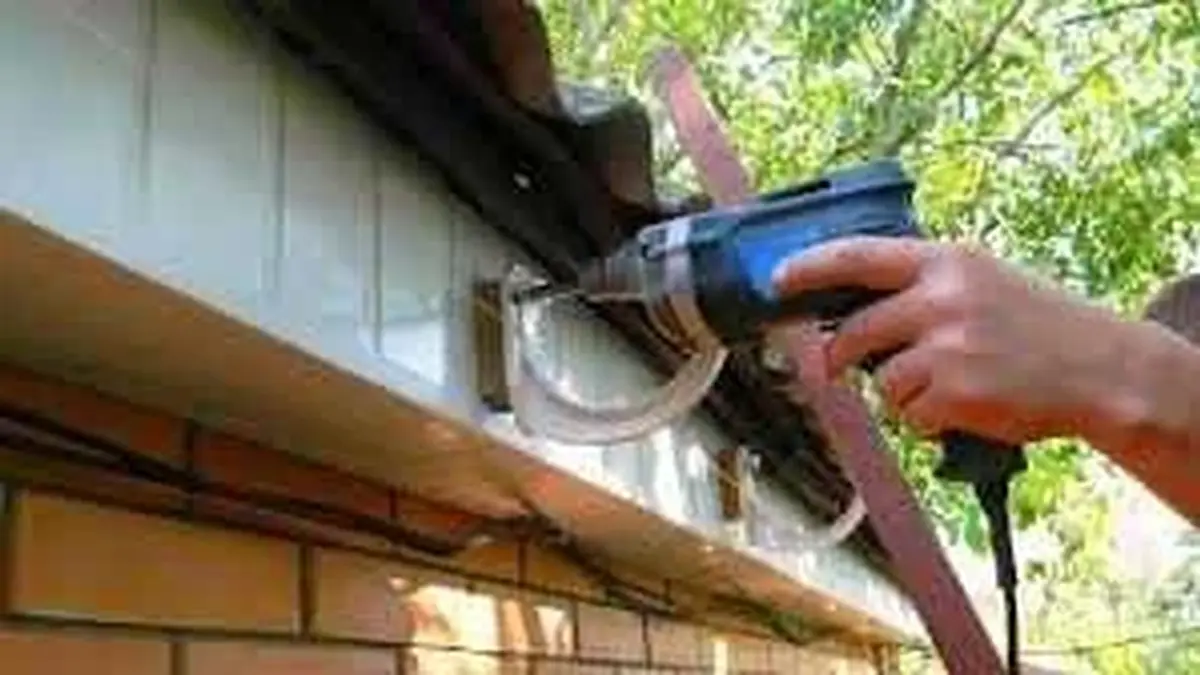
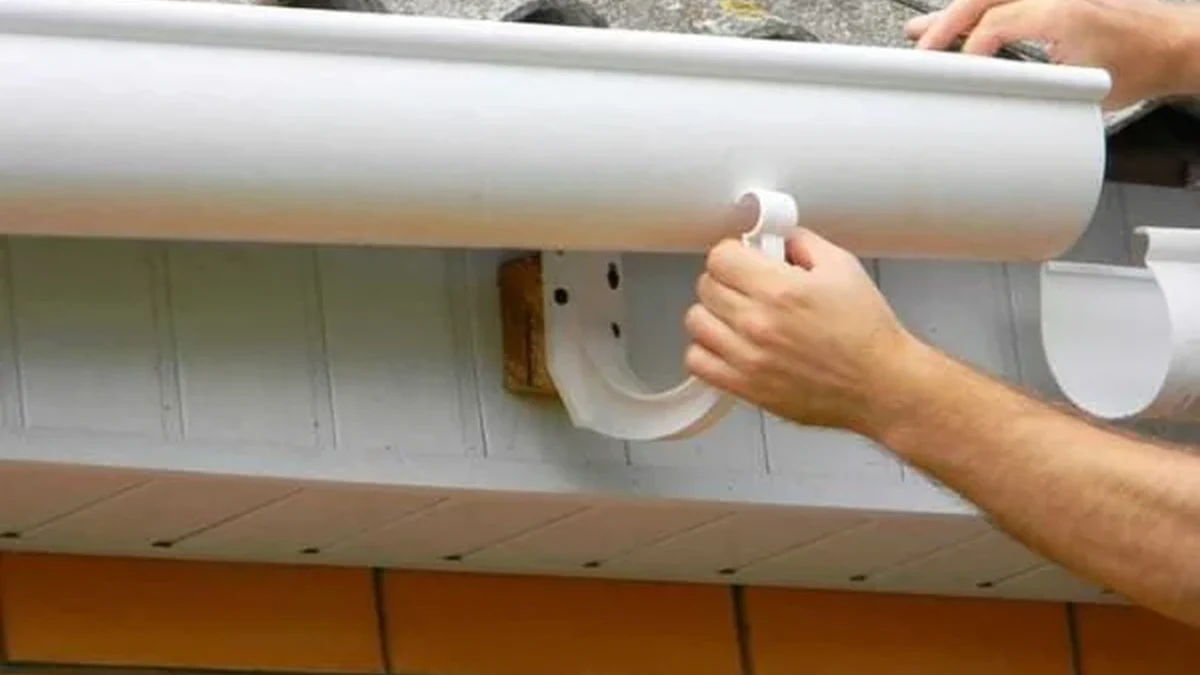
Add or replace hangers by working from the manufacturer’s instructions and keeping the fall of the gutter steady. Each hanger must grip sound fascia and be fixed at the correct height.
- Mark the hanger positions from the specification, plus support near joints, corners and outlets.
- Check the fascia is sound where each hanger will go.
- Fix the hangers at the correct height so that the gutter keeps its fall.
- Seat the gutter in the hangers and secure it.
- Test with a hose and check that water reaches the downpipe without pooling.
What mistakes should you avoid with gutter hangers?
Most hanger problems come from saving on fixings or fixing into weak timber. Avoiding these mistakes protects the gutter and the fascia behind it.
- Using fewer hangers to save money, which lets the run sag.
- Fixing into rotten or soft fascia.
- Reusing old, bent or rusted hangers on a new gutter.
- Setting the hangers at uneven heights so that the fall is lost.
- Ignoring the supports at corners, joints and outlets.
When should you call a professional?
Call a professional when the gutter is high or the roof steep, when the fascia is soft, or when the gutter keeps sagging after you have added supports. A specialist can check the fall, the fascia and the hangers together on your project.
Our gutter repair service and gutter re-alignment service cover these jobs.
Sources and further reading: WorkSafe: working at height · Building Code clause E1 – surface water (building.govt.nz) · Building Code clause E2 – external moisture (building.govt.nz)
Related guides: how to install gutter brackets · how to repair sagging gutters
Conclusion
Correct hanger spacing keeps a gutter straight, draining and firmly attached, and the manufacturer’s specification is the place to start. Check your hangers, repair soft fascia first and ask a professional to check the fall, the fascia and the fixings together if the work is beyond what you can do safely.
Frequently Asked Questions
How far apart should gutter hangers be?
Follow the gutter manufacturer’s specification for hanger spacing, which depends on the material, the profile and the load on the roof. Closer spacing is common where wind, heavy rain or debris adds load, so ask an installer to confirm it for your system.
Can I use fewer hangers to save money?
It is a false economy. Too few hangers let the gutter sag, hold water and pull on the fascia, and repairing a sagging gutter costs more than the saving.
Do seamless and sectional gutters need different hanger spacing?
They can. Seamless runs are continuous and sectional systems have joints that need support, so check the manufacturer’s guidance for each system, including how to support joints and corners.
How do I know if my hangers are too far apart?
Look for dips in the run, standing water, a gutter that flexes between hangers or one that pulls away from the fascia. A hose test also shows whether water reaches the downpipe.
What if the fascia is soft?
Repair or replace the fascia first. Hangers and brackets only hold in sound timber, so adding more of them to a rotten fascia will not stop the gutter sagging.
How many gutter brackets per metre do you need?
There is no single count that suits every gutter. The manufacturer’s specification for your material and profile sets the spacing, and the number of brackets per metre follows from it. Add support at joints, corners and outlets, and ask an installer to confirm the layout for your system.
Gutter Help Across Auckland
Reading up is a smart first step, but every Auckland property is a little different. For advice tailored to your own home, My Homes Construct Ltd offers free assessments and written quotes for gutter cleaning, repair and replacement across all Auckland regions and suburbs.
We respond to enquiries the same business day, explain your options in plain language, and stand behind every job with a workmanship warranty — no pressure and no hidden costs.
When to Call a Professional
Plenty of gutter cleaning, repair and replacement tasks are fine to tackle yourself, but it's worth knowing where the line is. If a job involves working at height, structural elements, water getting where it shouldn't, or anything you're not fully confident about, bringing in a professional is usually cheaper than fixing a DIY attempt that didn't hold up.
A good tradesperson also spots the things an untrained eye misses — the early warning signs that turn a small job today into a major repair next winter. If you're in any doubt, a free assessment costs nothing and gives you a clear, honest picture before you commit to anything.
Timing It Right in Auckland
Auckland's climate runs to its own calendar, and gutter cleaning, repair and replacement projects go more smoothly when they're scheduled with that in mind. Booking weather-dependent work for a settled stretch avoids delays, and getting preventative jobs done before winter saves you from reacting once the heavy rain and coastal winds arrive.
If you're not sure where your property sits on that timeline, that's exactly the kind of thing a free assessment answers. We'll tell you honestly whether something needs attention now or can sensibly wait until the season suits.
A Quick Checklist for Auckland Homeowners
Whatever you decide to do next, a few simple principles will save you money and stress on any gutter cleaning, repair and replacement job in Auckland.
- Act early — Auckland's wet, humid climate turns small problems into expensive ones faster than most people expect.
- Get it in writing — a clear, itemised written quote protects you and makes comparing options straightforward.
- Check it's a registered building company — it matters for quality, consent and warranty cover.
- Ask about the warranty — reputable Auckland tradespeople stand behind their workmanship, not just the materials.
- Think long-term value, not just the cheapest price — the lowest quote is rarely the best value once durability is factored in.
Keep these in mind and you'll avoid the most common — and most costly — mistakes we see on Auckland properties.
Need Professional Help in Auckland?
My Homes Construct Ltd provides expert gutter and full home-improvement services across all Auckland suburbs. Get a free, no-obligation quote today.
This guide is published by Auckland builders and renovation specialists — a registered Auckland building company covering gutters, roofing, renovation, painting, decks and civil construction.