
How to Measure Gutter Size: The Ultimate Step-by-Step Guide for Homeowners, DIYers, and Contractors
Quick answer: To measure gutter size, measure the width and depth of the channel you have, the length of each run and the position of the downpipes, then measure the roof area that drains to each run. Give those measurements to an installer or supplier, who will match a profile and downpipes to your roof and rainfall.
Choosing the right gutter size is a drainage question, because a gutter that is too small overflows in a storm and one that is too large wastes money. This guide explains how to measure gutter size and the roof it serves, what else affects the size you need and who should confirm the final choice for your project.
Why does gutter size matter?
Gutter size matters because the gutter has to carry all the water from the roof in heavy rain, and a gutter that is too small spills over the edge and soaks the fascia, the walls and the ground at the foundation.
- It prevents overflow: a correctly sized gutter and downpipes carry the water the roof sheds in a storm.
- It protects the house: water that stays in the system does not rot the fascia or wash away soil at the footings.
- It avoids waste: an oversized system costs more than it needs to.
What do you need to measure gutter size?
You need only simple tools to measure a gutter and the roof it serves, plus a safe way to reach the gutter.
- A tape measure, for the gutter, the fascia and the roof.
- A stable ladder and a helper, set up as the WorkSafe guidance under Sources describes.
- A notepad or a phone, for the measurements and photos of the gutter profile and the downpipes.
- A laser measure, if you have one, for long or high runs.
How do you measure the gutter you already have?
To measure an existing gutter, record its profile and its length, because the profile decides which replacement or extra parts will fit.
- Measure the width. Measure across the top of the channel from the front lip to the back, and note the result in millimetres.
- Measure the depth. Measure from the top to the bottom of the channel.
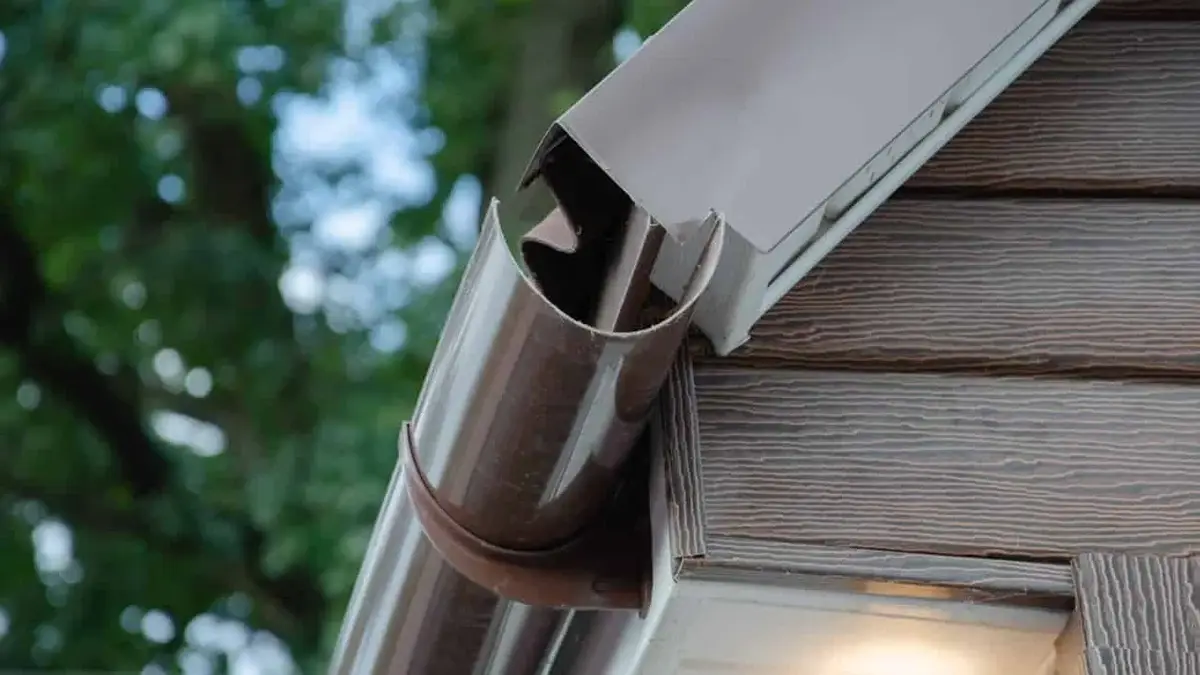
- Note the shape. Photograph the profile, because shapes such as quad, half-round and box are not interchangeable.
- Measure each run. Measure the length of each straight run, and note corners and joints.
- Record the downpipes. Note how many there are, where they are and their size.
How do you measure the roof area that drains to a gutter?
The size you need depends on how much roof drains to each gutter run, so measure the length of the run and the distance from the eaves to the top of the roof section that drains to it.
- Identify the runs. Note where each gutter run sits and which roof sections drain to it.
- Measure the length. Measure along the eaves for each run.
- Measure the distance up the roof. Measure from the eaves to the ridge or to the point where the roof sheds the other way, using the sloping distance if you can.
- Calculate the area. Multiply the length by the distance, in metres, to get the area in square metres for each run.
- Add the extras. Add roof areas from valleys, extensions and lean-tos that drain into the same run.
What else affects the gutter size you need?
The roof area is only part of the answer, because the pitch, the rainfall and the layout of the roof also decide how much water the gutter has to carry.
| Factor | How it affects the size |
|---|---|
| Roof area | A larger roof area sends more water to the gutter |
| Roof pitch | Steeper roofs shed water faster, so the gutter receives it more quickly |
| Rainfall intensity | Heavy, short downpours need more capacity than light rain |
| Valleys and extensions | Valleys concentrate water at one point and often need their own downpipe |
| Trees and debris | Leaves reduce capacity, so a larger size or guards may help |
| Downpipes | The number, size and position of the downpipes limit how fast the gutter can empty |
Who works out the final gutter size?
An installer or the gutter manufacturer works out the final size, because gutter and downpipe sizing is a design calculation that depends on the roof area and on New Zealand rainfall. Building Code clause E1, listed under Sources, covers surface water.
Sizing charts and calculators written for other countries use different rainfall data and units, so do not rely on them for a New Zealand house. Give your measurements to an installer or a supplier, and follow the manufacturer’s sizing guidance for the system you choose.
Our guides to how gutter size affects drainage and downpipe size and placement explain what a larger or smaller profile changes.
What mistakes should you avoid when measuring gutter size?
Most measuring mistakes are easy to avoid once you know what they are, and they are mostly about leaving out part of the roof or the way water behaves.
- Ignoring the pitch: a steep roof delivers water faster than a flat one.
- Overlooking heavy rain: a gutter sized for light rain fails in a downpour.
- Leaving out extensions and valleys: they send extra water to the same run.
- Measuring the gutter but not the roof: the roof decides how much water the gutter must carry.
- Guessing the profile: take a photo and measurements, because parts from a different profile will not fit.
When should you call a professional?
Call a professional when the roof is large or complex, when the gutter overflows even though it is clean, or when you are changing the system and want the size confirmed for your project.
Our gutter replacement service measures the roof and the gutters and quotes the right profile and downpipes, and the WorkSafe guidance under Sources explains the risks of working at height.
Sources and further reading: WorkSafe: working at height · Building Code clause E1 – surface water (building.govt.nz) · Building Code clause E2 – external moisture (building.govt.nz)
Related guides: gutters vs downpipes · the best gutter material for Auckland homes
Conclusion
Measuring gutter size means measuring the gutter you have and the roof it serves, then letting an installer or the manufacturer match the profile and downpipes to your roof and New Zealand rainfall. If you are replacing or upgrading a gutter, My Homes Construct Ltd offers a free written quote for your project.
Frequently Asked Questions
How do I choose the right gutter size?
Size depends on the roof area draining to the gutter and the rainfall, so measure the roof and ask an installer or supplier to match a profile and downpipe to it, following the manufacturer’s guidance.
Does a bigger roof need a bigger gutter?
Generally yes, because a larger roof sends more water to the gutter, so the profile, the outlets and the number of downpipes must suit the roof area.
Can I measure my gutter myself?
Yes. From the ground or a stable ladder you can note the width of the channel, the roof area it serves and the position of the downpipes, then ask a supplier to confirm the right profile.
Can I use an overseas gutter sizing calculator?
It is not a good idea. Calculators from other countries use different rainfall data and units, so ask a New Zealand installer or follow the manufacturer’s sizing guidance for your system.
Gutter Help Across Auckland
If this guide raised a question about your own home, the My Homes Construct Ltd team is here to help. We provide professional gutter cleaning, repair and replacement services right across Auckland — North Shore, West Auckland, Central Auckland, East Auckland and South Auckland — along with the surrounding suburbs.
Every enquiry starts with free, no-obligation advice and a written quote. We're a registered building company and back our work with a workmanship warranty as per your quotation, so you can move forward with confidence.
When to Call a Professional
The trickiest part of any gutter cleaning, repair and replacement project is often knowing when to stop and call someone in. Warning signs worth taking seriously include recurring problems, damage that keeps spreading, anything involving safety or access at height, and work that touches the structure of your home.
In those situations a professional opinion pays for itself. We're always happy to take a look and tell you straight whether it's something you can manage yourself or a job better left to a registered building company — with no obligation either way.
Timing It Right in Auckland
Timing matters more than most Auckland homeowners realise with gutter cleaning, repair and replacement work. The drier spells from late spring through summer are ideal for anything weather-sensitive, while the wetter winter months are when hidden faults tend to reveal themselves — which makes autumn a smart time for a preventative check before the rain sets in.
Planning ahead also means you're not scrambling for an emergency call-out at the worst possible moment. A quick seasonal inspection costs little and often catches the small issues that would otherwise become urgent — and expensive — repairs once Auckland's weather turns.
A Quick Checklist for Auckland Homeowners
Whatever you decide to do next, a few simple principles will save you money and stress on any gutter cleaning, repair and replacement job in Auckland.
- Act early — Auckland's wet, humid climate turns small problems into expensive ones faster than most people expect.
- Get it in writing — a clear, itemised written quote protects you and makes comparing options straightforward.
- Check it's a registered building company — it matters for quality, consent and warranty cover.
- Ask about the warranty — reputable Auckland tradespeople stand behind their workmanship, not just the materials.
- Think long-term value, not just the cheapest price — the lowest quote is rarely the best value once durability is factored in.
Keep these in mind and you'll avoid the most common — and most costly — mistakes we see on Auckland properties.
Need Professional Help in Auckland?
My Homes Construct Ltd provides expert gutter and full home-improvement services across all Auckland suburbs. Get a free, no-obligation quote today.
This guide is published by the My Homes Construct Ltd home page — a registered Auckland building company covering gutters, roofing, renovation, painting, decks and civil construction.