
Why Does Water Run Out of NZ Internal Gutters Even When They Are Not Full?
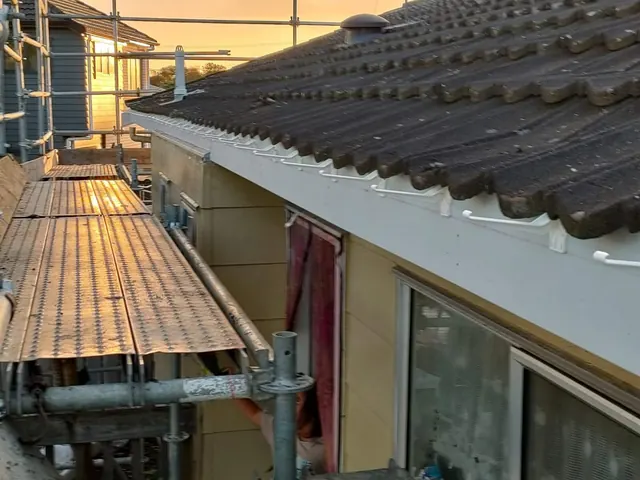
Quick answer: Why NZ internal gutters overflow when not full usually comes down to a blocked outlet or downpipe backing water up along one section, an outlet too small for the roof area, ponding from poor fall, or an overflow working as designed. A specialist assessment finds which cause applies to your roof.
Internal gutters (also called box gutters) sit within the roof or behind the fascia, so the first sign is often water inside the building. Here is how to work out the cause.
What is an internal gutter, and why does overflow matter more than on an eaves gutter?
An internal gutter sits between parallel surfaces, such as two roofs or where a roof meets a parapet wall, or concealed behind the fascia. Unlike an eaves gutter, which spills water outside the building when it overflows, an internal gutter can spill into the structure.
That is why NZ metal roofing guidance says the design of a concealed gutter must ensure that water cannot enter the soffit or overflow into the building if the outlet becomes blocked.
Why do NZ internal gutters overflow when not full?
Several causes explain why an internal gutter can overflow when it does not look full.
| Cause | What is happening | What to check |
|---|---|---|
| Blocked outlet or downpipe | Debris stops water leaving, so it backs up and spills at one section while the rest of the gutter looks empty | Clear the outlet and test the downpipe with a hose |
| Outlet too small for the roof area | The roof sheds water faster than the outlet can discharge it, for example when more roof area drains to an outlet that was sized for less | Have the roof area draining to the gutter compared with the outlet and downpipe capacity |
| Ponding | The gutter does not fall properly to the outlet, so water stands and spills at low points | Look for standing water after the rain has stopped |
| The overflow is working | A concealed gutter's overflow discharges through the soffit or immediately behind the fascia, so water leaving there is the safety path doing its job, not necessarily a fault | Note exactly where the water leaves and whether it is the overflow |
What are the signs of an internal gutter overflowing inside the building?
The signs of an internal gutter overflowing usually appear indoors or on the fascia and soffit, because that is where the water goes.
- Stains, bubbling paint or damp patches on the ceiling or wall near the roofline.
- Water marks or dripping at the junction of the ceiling and the wall during or after heavy rain.
- Damp, soft or discoloured timber on the fascia or soffit lining.
- A musty smell in upper rooms that comes and goes with the weather.
Any of these after rain means the gutter, outlet or lining needs checking, even if nothing looks wrong from the ground. Note when and where it happens, because that helps the assessor work out whether it is a blockage, a capacity problem or a leak.
What do NZ roofing guidelines say about outlets and overflow?
The NZ Metal Roofing Manufacturers Code of Practice states, for internal and box gutters:
The concealed gutter design must ensure that water cannot enter the soffit or overflow into the building if the gutter system outlet becomes blocked.
Overflows must be provided for concealed gutter systems within 1 metre on either side of the downpipe, discharging through the soffit or immediately behind the fascia, and be capable of discharging the total catchment area served by the downpipe.
Internal box gutters must have a minimum depth of 50 millimetres at their lowest point, including freeboard.
The size of a scupper outlet must have a cross-sectional area of 1½ times that required for a vertical downpipe outlet.
Secret gutters should be wide enough to allow for cleaning.
Its valley drainage guidance adds that where overflow of an internal gutter is likely to cause significant inconvenience, injury or damage to property, the Average Recurrence Interval used when calculating roof drainage must be 50 years. These are manufacturer guidelines rather than a substitute for your roof's own design documents, so the designer or roofer must follow the document that applies to your roof.
Is it a leak rather than an overflow?
Water that appears inside even though the gutter never looks full may not be overflow at all. It can also be escaping through a failed joint, seam or lining, or behind the fascia, so the water never reaches the top. Because the gutter is hidden, this is hard to tell from the ground. Our guide to internal gutter conversion in Auckland explains why hidden gutters often fail unnoticed until water is already running into the building.
What should you do first?
Start by watching the gutter in rain and noting exactly where the water leaves.
Watch the gutter in rain, safely from the ground or inside, and note exactly where water leaves.
Clear the outlet and test the downpipe with a hose.
Look for standing water after the rain stops.
If the overflow keeps happening, get a specialist to check the roof area against the outlet capacity, the fall and the overflow provision.
If water has entered the building, act quickly to limit damage, then have the cause assessed.
We can inspect the roofline at a free assessment. Related guides: rehabbing an old box gutter and downpipe size and placement for Auckland heavy rain.
What should an assessment of an overflowing internal gutter cover?
A proper assessment of an overflowing internal gutter checks the whole drainage path, not only the part you can see, and it should end with a written scope.
- Roof area against outlet capacity. Is the outlet and downpipe large enough for the roof that drains to it?
- Fall. Does the gutter fall properly to the outlet, or does water stand?
- Overflow provision. Is there an overflow where the guidelines expect one, and does it discharge safely?
- Condition of the lining and joints. Are there open seams, rust or failed sealant?
- Fascia and framing. Is the timber beside and below the gutter sound?
Describe what you have seen and when, so the assessor can match it to your roof. For your project, the result decides whether a repair, a relining or a conversion to an external system makes sense; see our guide to converting an internal gutter for the options.
Where does this guidance come from?
The guidance above comes from these primary New Zealand sources, which you can read in full.
Sources and further reading: NZ Metal Roofing Manufacturers Code of Practice: gutters · NZ Metal Roofing Manufacturers: valley drainage · Building Code clause E1 – surface water (building.govt.nz)
Related guides: why clean gutters still overflow · converting an internal gutter · Gutter Repair Auckland
Conclusion
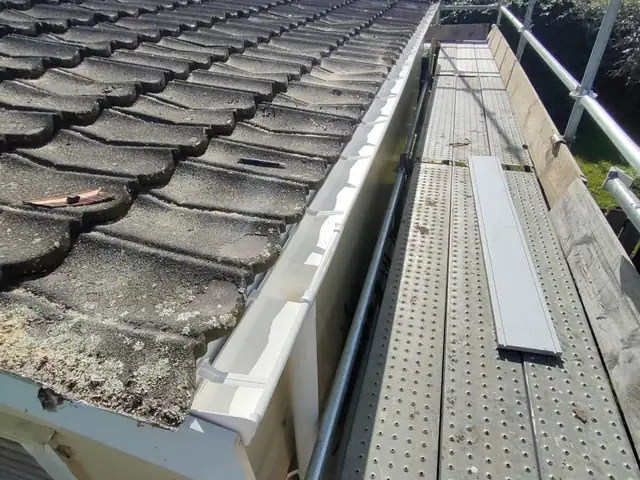
Water that escapes an internal gutter that looks half empty usually points to a blocked outlet, an outlet that is too small for the roof it serves, poor fall, or an overflow working as designed. Because the damage lands inside the building, it is worth having the cause confirmed by a specialist.
Frequently Asked Questions
Why does water overflow from my internal gutter when it is not full?
Common causes are a blocked outlet or downpipe backing water up along one section, an outlet too small for the roof area it serves, ponding from poor fall, or an overflow outlet that is working as designed.
What is an internal gutter?
An internal (box) gutter sits between parallel surfaces, such as two roofs or a roof and a parapet wall, or concealed behind the fascia, so overflow can enter the building rather than spill outside.
Do internal gutters need overflow outlets in NZ?
The NZ Metal Roofing Manufacturers Code of Practice says concealed gutters must have overflows within 1 metre on either side of the downpipe, discharging through the soffit or immediately behind the fascia. The designer must follow the document that applies to your roof.
Can I fix an overflowing internal gutter myself?
You can clear a blocked outlet and test the downpipe, but hidden gutters are hard and risky to inspect. If overflow keeps recurring, get a roofing or guttering specialist to assess capacity, fall and overflow provision.
How often should an internal gutter be cleaned?
At least twice a year, and after storms, because a blockage at the outlet causes most overflows. A concealed gutter is harder to reach safely, so use a professional if you cannot see or access it from a stable platform.
How can I tell whether the overflow is working or the gutter has failed?
Note exactly where the water leaves. Water discharging through the soffit or immediately behind the fascia where an overflow is provided is the safety path working, while water inside the building or leaving anywhere else points to a blockage, a capacity problem or a leak.
Gutter Help Across Auckland
Need a hand putting this into practice? My Homes Construct Ltd delivers gutter cleaning, repair and replacement services throughout Auckland, from the North Shore through to South Auckland, with the local knowledge to get the details right the first time.
Get in touch for a free, no-obligation quote. You'll deal with the same registered building company team across your whole project, with quality materials and a workmanship warranty as standard.
When to Call a Professional
Plenty of gutter cleaning, repair and replacement tasks are fine to tackle yourself, but it's worth knowing where the line is. If a job involves working at height, structural elements, water getting where it shouldn't, or anything you're not fully confident about, bringing in a professional is usually cheaper than fixing a DIY attempt that didn't hold up.
A good tradesperson also spots the things an untrained eye misses — the early warning signs that turn a small job today into a major repair next winter. If you're in any doubt, a free assessment costs nothing and gives you a clear, honest picture before you commit to anything.
Timing It Right in Auckland
Timing matters more than most Auckland homeowners realise with gutter cleaning, repair and replacement work. The drier spells from late spring through summer are ideal for anything weather-sensitive, while the wetter winter months are when hidden faults tend to reveal themselves — which makes autumn a smart time for a preventative check before the rain sets in.
Planning ahead also means you're not scrambling for an emergency call-out at the worst possible moment. A quick seasonal inspection costs little and often catches the small issues that would otherwise become urgent — and expensive — repairs once Auckland's weather turns.
A Quick Checklist for Auckland Homeowners
Whatever you decide to do next, a few simple principles will save you money and stress on any gutter cleaning, repair and replacement job in Auckland.
- Act early — Auckland's wet, humid climate turns small problems into expensive ones faster than most people expect.
- Get it in writing — a clear, itemised written quote protects you and makes comparing options straightforward.
- Check it's a registered building company — it matters for quality, consent and warranty cover.
- Ask about the warranty — reputable Auckland tradespeople stand behind their workmanship, not just the materials.
- Think long-term value, not just the cheapest price — the lowest quote is rarely the best value once durability is factored in.
Keep these in mind and you'll avoid the most common — and most costly — mistakes we see on Auckland properties.
Need Professional Help in Auckland?
My Homes Construct Ltd provides expert gutter and full home-improvement services across all Auckland suburbs. Get a free, no-obligation quote today.
This guide is published by My Homes Construct Ltd, a registered Auckland building company — a registered Auckland building company covering gutters, roofing, renovation, painting, decks and civil construction.