
Exterior House Colour Schemes in NZ: How to Choose Colours That Last
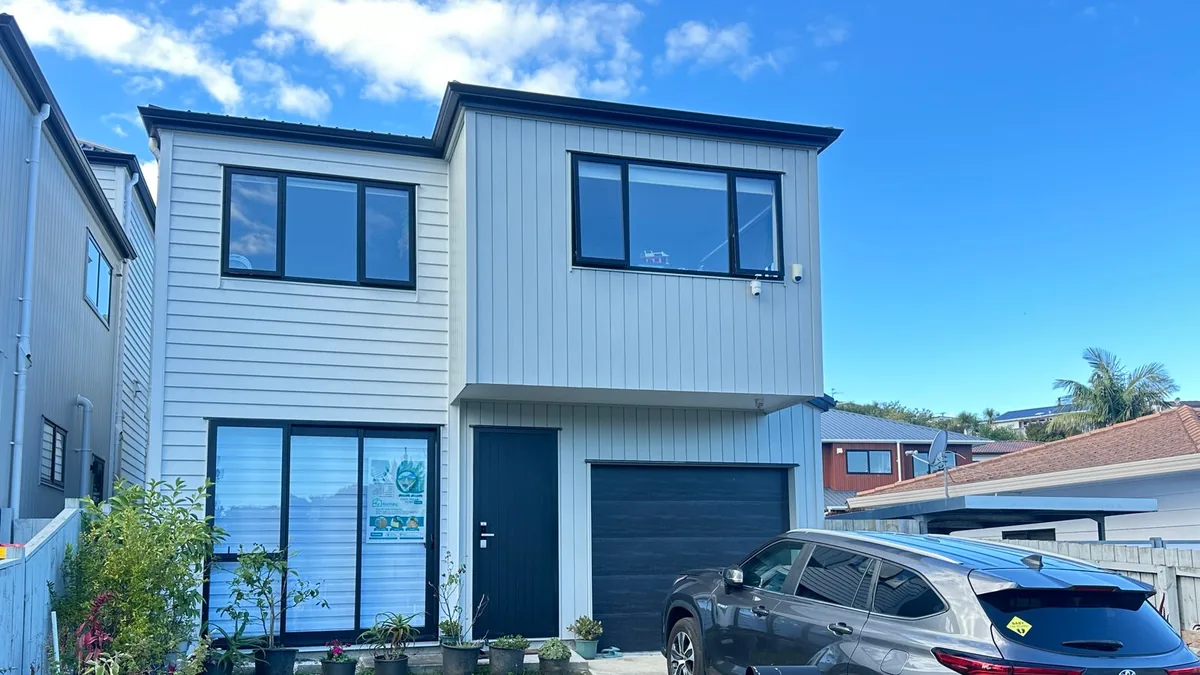
Quick answer: Exterior house colour schemes work best when they are built around the parts of the house that are not changing, such as the roof, brick and joinery, and then tested in real light. Choose a body colour, a trim colour and an accent, paint large samples on more than one wall and check them in morning and late afternoon light.
Below you will find a step-by-step method, how Auckland light affects colour and why very dark shades need a closer look.
How do you choose exterior house colour schemes, step by step?
You choose a scheme by working from what is fixed to what is flexible, then testing before you buy.
- List what stays. Note the roof, brick, stone, joinery colour, fascia, gutters, driveway and fences.
- Pick a body colour first. It covers the most area and sets the tone.
- Choose a trim colour. Trim should clearly relate to the body colour, lighter or darker, and work with the roof.
- Add one accent. A front door or a feature element is usually enough.
- Paint large test patches. Do this on more than one elevation, not on a chip.
- Look in different light. Check morning, midday, late afternoon and on an overcast day.
- Confirm the product. Make sure the exact colour is approved for the coating system on your cladding.
Our exterior painting service can help you work through the options, and our guide to coordinating gutters and exterior paint covers the parts people forget.
How many colours should a house exterior use?
Most houses work well with three: a body colour, a trim colour and an accent, with the roof and joinery already fixed.
| Part of the house | Role in the scheme | How to choose |
|---|---|---|
| Walls | Body colour; the largest area | Work from the roof and surroundings; test large samples |
| Trim, fascia and barge boards | Frames the house | Contrast gently with the body, or tone with it for a quieter look |
| Front door | Accent | Choose a colour you will enjoy seeing every day |
| Roof | Large fixed element | Treat it as part of the palette, not a separate decision |
| Gutters and downpipes | Support | Match the fascia or the wall so they recede |
Three colours is a guide, not a rule. Two-colour schemes suit modern forms, while villas often carry more detail in the trim.
How does Auckland light change the way a colour looks?
Auckland light is bright, and colours read cooler and lighter outdoors than they do indoors or on a chip.
That is why the practical advice is to test on the actual wall rather than choose from a swatch. Paint large patches on more than one elevation, look at them in the morning and late afternoon, and check them against the roof and joinery you are keeping. A colour that looks right in a showroom can look washed out or too intense on a sunny north wall, and much darker on a shaded south one.
Which colours suit which cladding?
Any colour can suit any cladding in principle, but the cladding changes what you need to check.
| Cladding | What to consider |
|---|---|
| Timber weatherboard | Timber moves with moisture and temperature; very dark colours increase heat absorption, so check the manufacturer’s guidance |
| Plaster and monolithic cladding | Rigid and prone to thermal movement; confirm the colour is approved for the system and check for cracks first |
| Brick | Painting brick is a one-way decision: once painted, it needs repainting permanently, because stripping it back is impractical |
| Fibre-cement | Generally stable; joints and flashings still need attention before coating |
| Profiled metal | Pre-painted steel can be repainted after weathering; colour changes need the right primer and topcoat system |
Weatherboard houses are covered in more detail in our weatherboard painting guide.
For plaster walls specifically, see painting plaster cladding, and for the roof the best roof colour for NZ homes.
Do darker exterior colours cost more to maintain?
Darker colours can cost more to maintain, because they absorb more heat and show weathering sooner.
BRANZ says some darker colours cause greater thermal movement of the substrate due to heat absorption, although infrared reflective pigments can reduce this effect. Darker walls may also show chalking and fading sooner, and a coastal setting adds salt and UV. That does not rule out dark colours, which suit many modern homes. It means you should ask whether the exact colour and product combination carries the same durability and warranty as a lighter option in the same range. See BRANZ Bulletin 633 for the factors that decide how long a finish lasts.
What mistakes do homeowners make with exterior colours?
Most colour regrets come from choosing too quickly, from a small sample, without looking at what stays.
- Choosing from a chip. A chip on a bench looks nothing like a wall in full sun.
- Forgetting the roof and joinery. They are part of the palette whether you chose them or not.
- Following a trend that does not suit the house. A villa and a 1990s plaster house carry colour in different ways.
- Ignoring maintenance. Very dark colours on exposed elevations show weathering sooner.
- Skipping the product check. Not every colour is approved for every system and substrate.
Do Special Character or heritage rules affect your colour choice?
Repainting is generally permitted, but check your address before you change materials or make external alterations in a Special Character Area.
In the Auckland Unitary Plan’s Special Character Areas Overlay, restoration and repair of a building is a permitted activity, while external alterations or additions are restricted discretionary and are assessed against matters that include whether the colour scheme is compatible with the age and character of the building. Scheduled historic heritage places can carry further rules. That is resource consent territory, not building consent. Use Auckland Council GeoMaps to see whether an overlay applies to your address, and read the overlay chapter listed under Sources.
How do you tie a colour scheme together with gutters, fascia and the roof?
You tie a scheme together by letting the supporting elements either match the wall or the trim, so they recede instead of competing.
Gutters and downpipes that match the fascia look intentional, and a roof is part of the palette from the moment you choose it. If gutter replacement is on the cards, doing it before repainting avoids repainting twice, and our guide to gutter installation and painting covers the sequence. For coastal homes, coastal paint systems explains why the product matters as much as the shade.
Weather and timing are covered in the best time to paint a house exterior.
Sources
These are the primary New Zealand sources behind the facts in this guide.
Conclusion
A good exterior colour scheme is built around what stays, tested in real light on the real wall and backed by a product approved for your cladding. Take your time with the samples, check any overlays and ask for the specification in writing.
Frequently Asked Questions
How do I test exterior paint colours properly?
Paint large test patches on more than one elevation, not on a chip or a small board. Look at them in morning and late afternoon light, in sun and on an overcast day, and check them against the roof and joinery you are keeping.
Should the trim be lighter or darker than the walls?
Either can work. A lighter trim frames the house crisply, while a darker trim gives definition against light walls. Choose by testing both against the roof and joinery, and remember that very dark trim shows weathering sooner on exposed elevations.
Is painting brick a good idea?
It can transform dated brick, but it is a one-way decision because brick needs repainting permanently once painted. The brick must be sound, dry and clean, and the coating system should allow the wall to keep breathing.
Do colours look different on different walls?
Yes. A north wall in direct sun makes colours look lighter and warmer, and a shaded south wall makes the same colour look darker and cooler. That is why you should test on each elevation you plan to paint.
Painting Help Across Auckland
If this guide raised a question about your own home, the My Homes Construct Ltd team is here to help. We provide professional interior and exterior painting services right across Auckland — North Shore, West Auckland, Central Auckland, East Auckland and South Auckland — along with the surrounding suburbs.
Every enquiry starts with free, no-obligation advice and a written quote. We're a registered building company and back our work with a workmanship warranty as per your quotation, so you can move forward with confidence.
When to Call a Professional
Plenty of interior and exterior painting tasks are fine to tackle yourself, but it's worth knowing where the line is. If a job involves working at height, structural elements, water getting where it shouldn't, or anything you're not fully confident about, bringing in a professional is usually cheaper than fixing a DIY attempt that didn't hold up.
A good tradesperson also spots the things an untrained eye misses — the early warning signs that turn a small job today into a major repair next winter. If you're in any doubt, a free assessment costs nothing and gives you a clear, honest picture before you commit to anything.
Timing It Right in Auckland
One thing worth keeping in mind with interior and exterior painting in Auckland is how much the seasons shape the right approach. Coastal exposure, humidity and sudden downpours all affect both the work itself and how long the result lasts, so the best time to act isn't always obvious from the kerb.
Booking early in the season also means more flexibility on dates and fewer surprises. We're happy to map out sensible timing with you at no cost, so the job lands when conditions — and your budget — are right.
A Quick Checklist for Auckland Homeowners
Whatever you decide to do next, a few simple principles will save you money and stress on any interior and exterior painting job in Auckland.
- Act early — Auckland's wet, humid climate turns small problems into expensive ones faster than most people expect.
- Get it in writing — a clear, itemised written quote protects you and makes comparing options straightforward.
- Check it's a registered building company — it matters for quality, consent and warranty cover.
- Ask about the warranty — reputable Auckland tradespeople stand behind their workmanship, not just the materials.
- Think long-term value, not just the cheapest price — the lowest quote is rarely the best value once durability is factored in.
Keep these in mind and you'll avoid the most common — and most costly — mistakes we see on Auckland properties.
Need Professional Help in Auckland?
My Homes Construct Ltd provides expert painting and full home-improvement services across all Auckland suburbs. Get a free, no-obligation quote today.
This guide is published by Auckland builders and renovation specialists — a registered Auckland building company covering gutters, roofing, renovation, painting, decks and civil construction.