
Painting Plaster Cladding in NZ: Cracks, Moisture Checks and the Right Coating
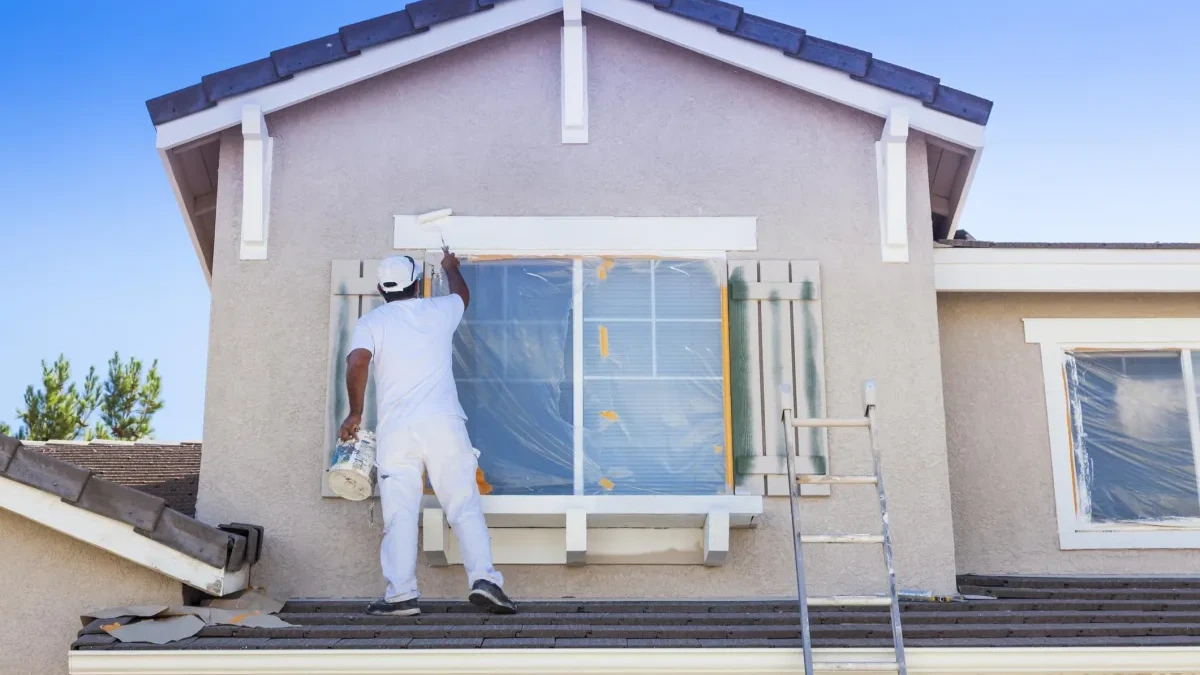
Quick answer: Painting plaster cladding starts with diagnosis, not paint. Fine surface crazing can be filled and coated with a flexible system. Cracks that are straight, stepped or opening at junctions can indicate movement or a moisture path behind the cladding, and painting over them hides a problem that keeps growing. Get the cause checked before choosing a coating.
This guide shows how to read cracks, how plaster should be cleaned and prepared, and what to ask about the coating system.
Can plaster cladding be painted, and what should you check first?
Plaster cladding can be painted, and the first check is whether the cladding is sound and dry underneath.
Cracks need diagnosing before coating. Painting is the finishing step of a repair, not the repair itself, and a coating applied over an active crack or a wet substrate will fail or hide damage. Before you get quotes, look at the walls in good light and note any cracks, staining below windows, bubbling or soft areas, and where gutters or downpipes overflow onto the wall.
What do different cracks in plaster cladding mean?
Different crack patterns point to different causes, and the pattern is the first clue to whether it is cosmetic or serious.
| What you see | What it can mean | What to do |
|---|---|---|
| Fine, random surface crazing | Surface shrinkage or weathering of the finish coat | Fill and coat with a flexible system |
| Straight or stepped cracks | Movement in the substrate or framing | Have the cause checked before coating |
| Cracks opening at windows, corners or junctions | A possible moisture path or movement at the joint | Get a building assessment first |
| Staining or bubbling below the crack | Moisture may be entering and travelling behind the cladding | Stop work and have the wall investigated |
| Soft or crumbling patches | The finish or substrate may be saturated | Investigate and repair before any coating |
The table is a guide, not a diagnosis. Anything beyond fine crazing deserves an expert look.
How should plaster cladding be prepared for painting?
Plaster is prepared by cleaning it gently, repairing it properly and priming it with a system that suits the substrate.
- Clean without damaging the finish. Use hand washing or low pressure with a detergent to remove mould, dirt and chalk.
- Assess the cracks. Separate surface crazing from cracks that signal movement or moisture.
- Repair. Fill and repair the sound cracks with materials compatible with the plaster, and deal with movement and moisture causes first.
- Remove loose coating. Take off flaking paint but accept that total removal is not possible on porous or textured plaster.
- Prime. Use the primer the coating manufacturer specifies for plaster.
- Topcoat. Apply a flexible, breathable system to the manufacturer’s specification.
Our exterior painting service covers plaster, brick, weatherboards and other cladding, and our weatherboard painting guide and coastal paint systems guide cover the neighbouring cladding types.
Why is water-blasting risky on plaster?
Water-blasting is risky on plaster because the pressure can damage the finish coat or erode softer plaster systems.
BRANZ states that waterblasting must not be used on modified cement plastered finishes, because the pressure can damage the finish coat, or on soft claddings such as acrylic plaster, which it will erode. It also notes that total paint removal is not possible on porous or textured surfaces such as cement plaster. Wash gently and accept that loose paint is removed while sound paint stays. See BRANZ Bulletin 633.
Which coating and colour suit plaster cladding?
A flexible, breathable coating system that the manufacturer specifies for plaster is the right choice, and colour needs checking against its limits.
BRANZ notes that some darker colours cause greater thermal movement of the substrate because they absorb more heat, although infrared reflective pigments can reduce that effect. On a plaster wall that already has crack history, ask the coating manufacturer whether your chosen colour is approved for the system and the substrate. Ask for the specification and warranty in writing, and confirm that the warranty does not exclude building faults underneath the coating.
Colour selection is covered in exterior house colour schemes, and the preparation order in exterior paint preparation.
How often does a plaster house need repainting?
A plaster house needs repainting when the coating chalks or shows early failure, not on a fixed date, and washing between repaints extends the time.
BRANZ says repainting is typically required every seven to ten years depending on exposure, orientation, cleaning frequency, colour and the quality of the original preparation and paint. It also recommends annual washing to remove dirt, salt spray, moss and mildew. Regular washing is cheap, and it lets you see cracks and staining early, which is when they are cheapest to deal with.
What should a plaster repaint quote include?
A plaster repaint quote should show how cracks are assessed and repaired, not just how many coats go on.
- Crack assessment. How cracks are classified and what happens to each type.
- Repair materials. What is used to fill and seal, and whether it is flexible.
- Cleaning method. Hand washing or low pressure, with no high-pressure blasting.
- Coating specification. Primer and topcoat by name, with the manufacturer’s approval for plaster.
- Colour approval. Confirmation that the colour is approved for the system.
- Warranty. What the workmanship and manufacturer warranties cover and exclude.
See our exterior house painting cost guide for how scope affects price.
When should you get a building assessment before painting plaster?
Get an assessment before painting if the cracks are anything more than fine crazing, if there is staining or bubbling, or if you have a history of leaks.
Painting over a moisture path hides a problem that keeps growing, and warranties cover coating performance, not building faults underneath it. A building assessment can include moisture readings and an opinion on whether repairs come before coating. It can save you from paying for a repaint twice.
If the coating is already failing, peeling exterior paint explains the causes and the repair sequence.
Sources
These are the primary New Zealand sources behind the facts in this guide.

Conclusion
Plaster cladding rewards patience. Read the cracks, find out whether moisture is involved and repair properly before you coat. Then choose a flexible system that is specified for plaster, and ask for the specification and warranty in writing.
Frequently Asked Questions
Can I paint over hairline cracks in plaster?
Fine surface crazing can be filled and coated with a flexible system. Cracks that are straight, stepped or opening at junctions can indicate movement or a moisture path, and they should be diagnosed before coating or the problem simply continues behind the paint.
Is plaster cladding more likely to leak than weatherboards?
It depends on the age, detailing and maintenance of the house, not the material alone. Plaster systems rely on correct junction details and sealed joints, so cracks near windows and corners deserve more attention than cracks in the middle of a wall.
Can dark colours be used on plaster?
Sometimes, but darker colours absorb more heat and can increase thermal movement of the substrate. Check that the specific colour and product are approved for plaster in the manufacturer’s system, and ask whether a lower-heat version of the colour is available.
How often should a plaster house be repainted?
It depends on the product, the preparation and the exposure of each wall, and you should repaint when the coating chalks or shows early failure, not by a fixed date. BRANZ gives seven to ten years as typical for exterior paint in general.
Painting Help Across Auckland
If this guide raised a question about your own home, the My Homes Construct Ltd team is here to help. We provide professional interior and exterior painting services right across Auckland — North Shore, West Auckland, Central Auckland, East Auckland and South Auckland — along with the surrounding suburbs.
Every enquiry starts with free, no-obligation advice and a written quote. We're a registered building company and back our work with a workmanship warranty as per your quotation, so you can move forward with confidence.
When to Call a Professional
Plenty of interior and exterior painting tasks are fine to tackle yourself, but it's worth knowing where the line is. If a job involves working at height, structural elements, water getting where it shouldn't, or anything you're not fully confident about, bringing in a professional is usually cheaper than fixing a DIY attempt that didn't hold up.
A good tradesperson also spots the things an untrained eye misses — the early warning signs that turn a small job today into a major repair next winter. If you're in any doubt, a free assessment costs nothing and gives you a clear, honest picture before you commit to anything.
Timing It Right in Auckland
One thing worth keeping in mind with interior and exterior painting in Auckland is how much the seasons shape the right approach. Coastal exposure, humidity and sudden downpours all affect both the work itself and how long the result lasts, so the best time to act isn't always obvious from the kerb.
Booking early in the season also means more flexibility on dates and fewer surprises. We're happy to map out sensible timing with you at no cost, so the job lands when conditions — and your budget — are right.
A Quick Checklist for Auckland Homeowners
Whatever you decide to do next, a few simple principles will save you money and stress on any interior and exterior painting job in Auckland.
- Act early — Auckland's wet, humid climate turns small problems into expensive ones faster than most people expect.
- Get it in writing — a clear, itemised written quote protects you and makes comparing options straightforward.
- Check it's a registered building company — it matters for quality, consent and warranty cover.
- Ask about the warranty — reputable Auckland tradespeople stand behind their workmanship, not just the materials.
- Think long-term value, not just the cheapest price — the lowest quote is rarely the best value once durability is factored in.
Keep these in mind and you'll avoid the most common — and most costly — mistakes we see on Auckland properties.
Need Professional Help in Auckland?
My Homes Construct Ltd provides expert painting and full home-improvement services across all Auckland suburbs. Get a free, no-obligation quote today.
This guide is published by registered Auckland builders — a registered Auckland building company covering gutters, roofing, renovation, painting, decks and civil construction.