
Asbestos Roof Removal in Auckland: What NZ Homeowners Must Know
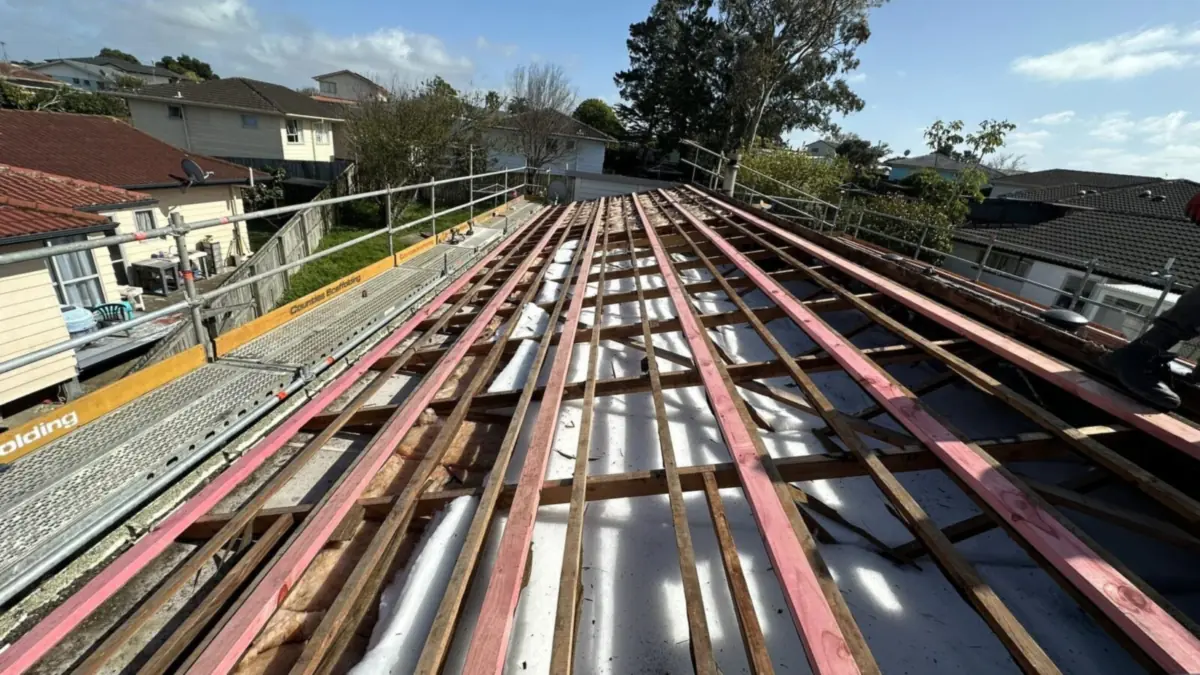
Quick answer: Asbestos roof removal in New Zealand is regulated, and you cannot tell asbestos cement from ordinary cement by looking. Homes built before 2000 may contain it. Do not sand, drill, cut or water-blast the roof. Have it sampled, and use a licensed removalist for any friable asbestos or more than ten square metres of non-friable material.
This guide sets out how to find out what you have, what WorkSafe expects of homeowners and contractors, and how removal fits into a re-roof.
How can you tell if your roof contains asbestos?
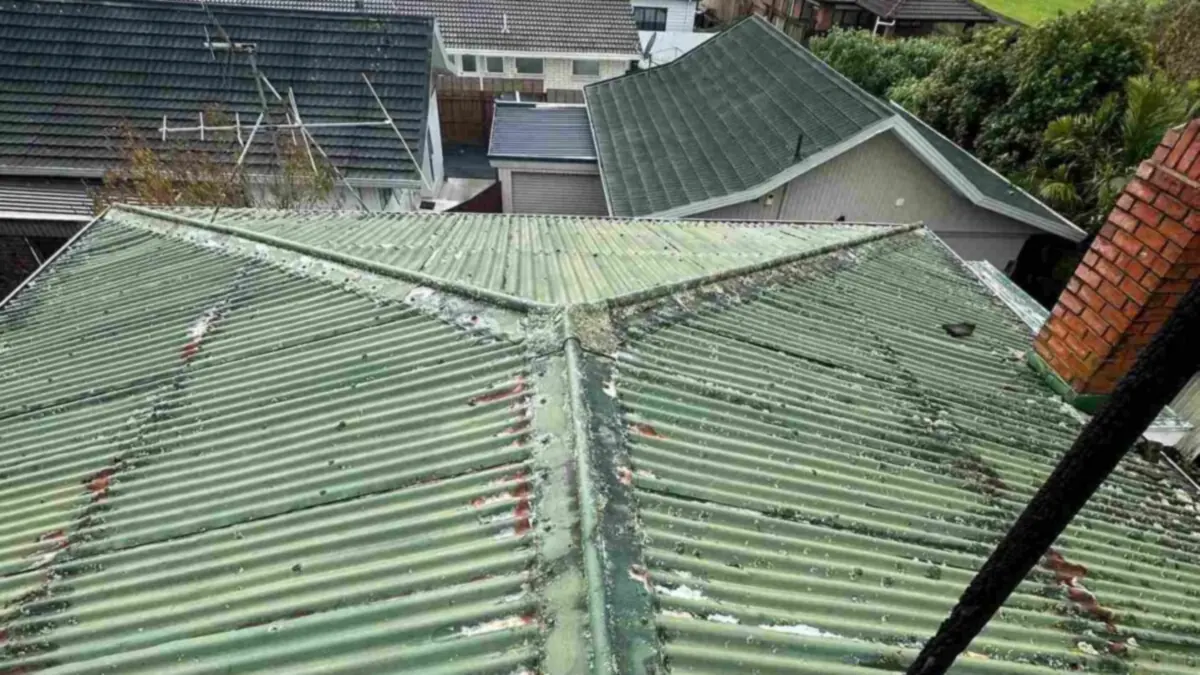
You cannot tell by looking, because cement that contains asbestos can look identical to cement that does not. Only a test of a sample will confirm it.
WorkSafe says homes built before 1 January 2000 may contain asbestos materials, and that the risk is lower for homes built after that date. Asbestos cement was often used in roof sheeting and ridge capping, and it can also be found in gutters, downpipes, gables and eaves, including the lining under eaves. It was used in fences, carports, garages and garden sheds too. Asbestos sampling should only be done by a reputable contractor.
What should you do if you suspect an asbestos roof?
If you suspect an asbestos roof, leave it undisturbed, tell the people you live with, and contact a reputable asbestos contractor.
- Do not disturb it. Asbestos fibres are more likely to be released if material is sanded, drilled, cut or water-blasted.
- Tell others. Tell the people in your home, and your landlord if you rent.
- Get it tested. Contact a reputable asbestos contractor, such as a surveyor, who can confirm the material and assess the risk.
- Plan how to manage it. The right choice depends on how much is present, its condition, where it is and what work is planned nearby.
If you disturb it by accident, stop, keep people and pets away and contact a contractor for advice on clean-up.
Is an asbestos cement roof dangerous if you leave it alone?
Non-friable, bonded asbestos materials generally do not release fibres if they are in good condition and are not disturbed.
WorkSafe explains that asbestos fibres are more likely to be released if material is friable, in poor condition, for example flaking, peeling or crumbling, or disturbed in any way. That is why cleaning a suspected asbestos roof with a water blaster is a bad idea. All forms of asbestos are harmful, and even a single exposure to high concentrations can cause serious health problems later in life, so the aim is always to avoid creating dust.
Who is allowed to remove an asbestos roof, and what does the law say?
Removal is regulated work. A licence is needed for friable asbestos in any amount, and for non-friable asbestos above ten square metres.
| Type of work | Licence needed? | Notes |
|---|---|---|
| Any friable asbestos, or any amount of asbestos-contaminated dust or debris from it | Class A licence | Class A covers any type or quantity of asbestos |
| Non-friable asbestos cement, such as roofing sheets, above 10 square metres | Class B or Class A licence | Class B covers any amount of non-friable material |
| Up to and including 10 square metres of non-friable asbestos in total | No licence | The 10 square metres is cumulative over the whole project at the site, and all work must still be done safely |
That cumulative wording matters if a roof is removed in stages. WorkSafe still strongly recommends advice from a reputable contractor, and warns that attempting removal without specialist training is extremely dangerous. You can check a removalist’s licence on the WorkSafe licence information and register.
What does asbestos roof removal involve?
A professional removal follows a plan: survey, controlled removal, correct disposal and, where the type requires it, an independent check.
- Survey. A surveyor identifies and samples the material and reports on it.
- Removal control plan. The removalist assesses the work and writes an asbestos removal control plan that explains the process and safety measures.
- Neighbours. The removalist contacts neighbours to let them know the work will happen.
- Controlled removal and disposal. Specialised equipment and strict procedures are used, and waste goes to an authorised disposal site.
- Assessor check. For Class A work, an independent licensed assessor inspects the area, tests the air and confirms in writing that it is safe to re-enter.
Because removal is a separate stage before the new roof starts, build it into the budget and programme up front rather than discovering it on strip-out day.
Do landlords have extra duties for asbestos roofs?
Yes. Residential landlords must make sure that work at their property is done safely, and that includes asbestos.
If workers or other people, including tenants, could be exposed to asbestos fibres during the work, WorkSafe says a landlord must identify the asbestos and prepare an asbestos management plan for that work. If you pay someone to do work on asbestos at your home, the property becomes a workplace for the duration of the work, and as the owner you must take reasonable care for your own health and safety and follow reasonable instructions from the contractors.
Do you need building consent to replace an asbestos roof?
Replacing a roof with a comparable product in the same position is generally exempt from building consent, but a change of material or structure usually is not, so check before you order product.
Schedule 1 exempts like-for-like replacement of a roof component, and the Ministry’s own example is replacing 20-year-old profile metal roof cladding with profiled metal after it has passed its 15-year durability requirement. A roof that failed inside 15 years generally needs consent to replace. Whether a different cladding counts as comparable is a judgement, so confirm it with the council when asbestos cement is being replaced with another material. Our roof replacement consent guide sets out the typical triggers, and our re-roofing cost and process guide shows how a full re-roof is staged. Once testing confirms asbestos, our re-roofing service is quoted with removal as a separate stage.
The roof warranty guide explains what to keep from a re-roof, and our sister brand’s house re-roofing page describes its full re-roofing process.
Sources
These are the primary New Zealand sources behind the facts in this guide.
Conclusion
An asbestos cement roof is not an emergency if it is left undisturbed, but it needs a plan before any roof work starts. Test it, use a reputable licensed contractor where the rules require it, and build removal into the re-roof budget from the beginning.
Frequently Asked Questions
Can I remove an asbestos roof myself?
The law allows unlicensed removal of up to and including ten square metres of non-friable asbestos in total, but WorkSafe strongly recommends advice from a reputable contractor. Removal without specialist training is extremely dangerous and can be expensive to fix.
Can I paint or wash an asbestos roof?
Do not water-blast or scrub it, because disturbing the surface releases fibres. Any coating or cleaning decision should come from an asbestos contractor after the material has been tested, since the condition of the roof decides what is safe.
Where can asbestos waste go?
Asbestos waste must go to an authorised disposal site. Never burn it or put it in normal council bins. If you hire a contractor they dispose of it for you, and if you do the work yourself, call your council ahead to find the right tip.
How do I find a licensed asbestos removalist?
WorkSafe publishes a licence holder register for removalists and assessors, which you can search to confirm a licence before you sign. Also ask for a written quote that covers testing, the control plan, disposal and any warranties.
Roofing Help Across Auckland
Need a hand putting this into practice? My Homes Construct Ltd delivers roofing and re-roofing services throughout Auckland, from the North Shore through to South Auckland, with the local knowledge to get the details right the first time.
Get in touch for a free, no-obligation quote. You'll deal with the same registered building company team across your whole project, with quality materials and a workmanship warranty as standard.
When to Call a Professional
Plenty of roofing and re-roofing tasks are fine to tackle yourself, but it's worth knowing where the line is. If a job involves working at height, structural elements, water getting where it shouldn't, or anything you're not fully confident about, bringing in a professional is usually cheaper than fixing a DIY attempt that didn't hold up.
A good tradesperson also spots the things an untrained eye misses — the early warning signs that turn a small job today into a major repair next winter. If you're in any doubt, a free assessment costs nothing and gives you a clear, honest picture before you commit to anything.
Timing It Right in Auckland
Auckland's climate runs to its own calendar, and roofing and re-roofing projects go more smoothly when they're scheduled with that in mind. Booking weather-dependent work for a settled stretch avoids delays, and getting preventative jobs done before winter saves you from reacting once the heavy rain and coastal winds arrive.
If you're not sure where your property sits on that timeline, that's exactly the kind of thing a free assessment answers. We'll tell you honestly whether something needs attention now or can sensibly wait until the season suits.
A Quick Checklist for Auckland Homeowners
Whatever you decide to do next, a few simple principles will save you money and stress on any roofing and re-roofing job in Auckland.
- Act early — Auckland's wet, humid climate turns small problems into expensive ones faster than most people expect.
- Get it in writing — a clear, itemised written quote protects you and makes comparing options straightforward.
- Check it's a registered building company — it matters for quality, consent and warranty cover.
- Ask about the warranty — reputable Auckland tradespeople stand behind their workmanship, not just the materials.
- Think long-term value, not just the cheapest price — the lowest quote is rarely the best value once durability is factored in.
Keep these in mind and you'll avoid the most common — and most costly — mistakes we see on Auckland properties.
Need Professional Help in Auckland?
My Homes Construct Ltd provides expert roofing and full home-improvement services across all Auckland suburbs. Get a free, no-obligation quote today.
This guide is published by Auckland construction and home renovation company — a registered Auckland building company covering gutters, roofing, renovation, painting, decks and civil construction.