
Roof Leak Causes in NZ: Why Roofs Leak and How a Roofer Finds the Source
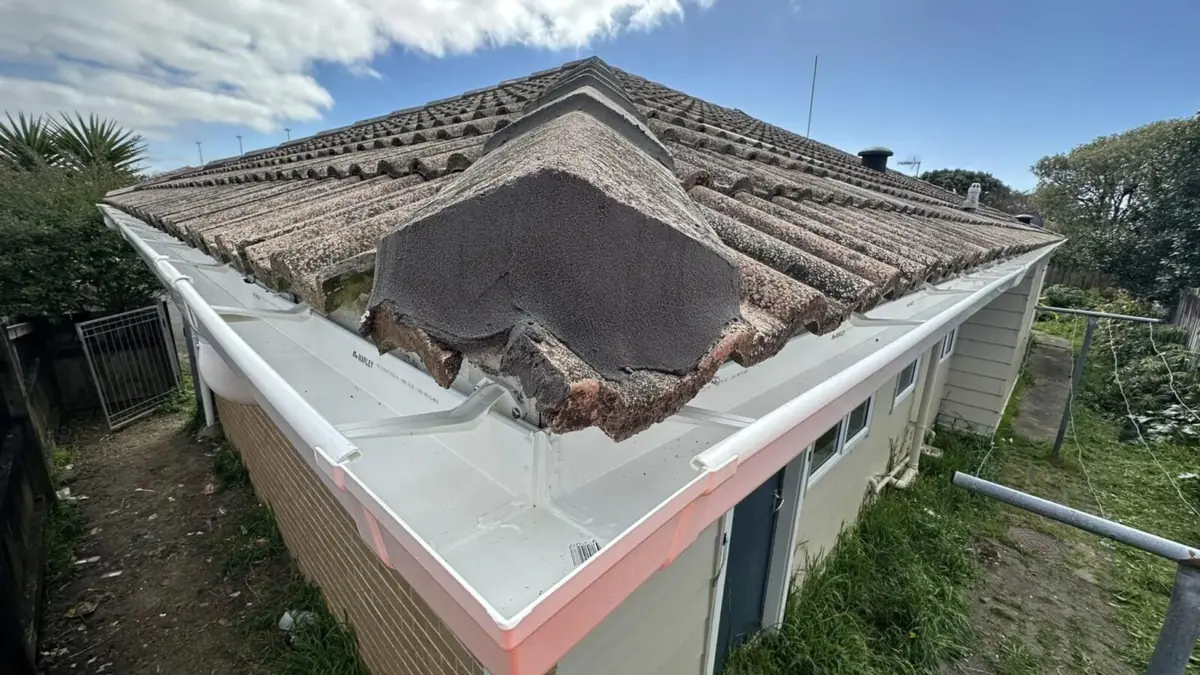
Quick answer: Roof leak causes are usually found at junctions rather than in the middle of a sheet or tile. The common sources on New Zealand homes are failed flashings, cracked tiles, crumbling ridge pointing, rusted laps and fixings, blocked valleys and gutters, and penetrations such as flues and vents. Condensation is sometimes mistaken for a leak.
This guide lists each cause, explains why the stain on your ceiling is rarely under the leak, and shows what you can safely check yourself.
Where do roof leaks usually start?
Roof leaks usually start at a junction: a ridge, a valley, a wall abutment, a penetration or the line where two roof planes meet.
Flashings handle every one of those junctions, which is why reusing tired flashings on a new roof is a common way for a new roof to still leak. The flat surface of a sheet or tile is the part designed to shed water. The joints between components are where the design depends on workmanship and on materials that last.
What are the most common roof leak causes on Auckland roofs?
Most leaks trace back to a short list of defects, and which one applies depends on whether the roof is tile or steel.
| Cause | Roof type | What to look for |
|---|---|---|
| Failed or lifted flashings | All roofs | Gaps, lifted edges or rust along walls, chimneys and ridges |
| Cracked or slipped tiles | Tile | Broken tiles, or tiles out of line with their neighbours |
| Failing ridge or hip pointing | Tile | Crumbling mortar, loose caps, gaps along the ridge line |
| Rust at laps, fixings or valleys | Steel and iron | Orange staining, bubbling paint, holes around fasteners |
| Fasteners backing out or worn washers | Steel and iron | Screws or nails standing proud of the sheet |
| Blocked valleys and gutters | All roofs | Overflow marks, debris in valleys, water sitting after rain |
| Penetrations | All roofs | Flues, vents, aerials and solar fixings with cracked or lifted flashing kits |
Our roof leak repair service starts by tracing the true entry point, not the symptom.
Junction details are covered in our roof flashing guide, and rusty roof repair explains corrosion at laps and fixings.
Why is the ceiling stain never directly under the leak?
The stain is rarely under the leak because water travels along timber, underlay and framing before it drops at the first low point.
Water can enter at a flashing or lap, run along a purlin, a rafter or the underlay, and show up metres away. That is why sealing around the stain so often fails. Proper diagnosis follows the water path back uphill to the entry point, and a roof-space inspection on a dry day often shows tide marks that point the way.
How can you tell a roof leak from condensation?
A leak usually gets worse during or soon after rain, while condensation follows cold, still conditions and sits on cold surfaces.
- Timing. Leaks appear with rain and wind-driven rain; condensation shows on cold mornings and in rooms with little ventilation.
- Location. Leaks are patchy and follow the roof structure; condensation tends to cover cold surfaces such as windows and the underside of roofing.
- Evidence. A leak leaves tide marks on timber and underlay; condensation leaves mould and general dampness.
If insulation and airflow are the real problem, our roof insulation and ventilation guide covers the fixes.
What can you safely check yourself?
You can safely check a lot from the ground and from inside the roof space, and you should stay off the roof itself.
- Look from the ground. Use binoculars to spot lifted or slipped tiles, rust streaks, missing ridge mortar and moss.
- Check the roof space. On a dry day, look for daylight, damp timber and stained underlay.
- Clear the gutters. Remove debris that sends water where it should not go.
- Photograph and date everything. Photos help a roofer and, if needed, an insurer.
WorkSafe’s guidance on working on roofs advises inspecting remotely where it can be done, and it is a good reason to leave the climbing to trained roofers.
When is a leak a repair, and when is it a warning about the whole roof?
A single leak traced to one flashing or a few tiles is a repair, while leaks that keep reappearing in new places point to a roof at the end of its life.
The working rule across the trade is that when repairs add up to roughly half the cost of replacement, or you are calling someone back for a third leak, you are funding a roof you will still have to replace. Our repair-or-replace guide explains how to weigh it, and the emergency checklist covers what to do while water is coming in.
What does a proper leak repair involve?
A proper leak repair finds the true entry point, fixes that cause with a durable detail and proves the fix with a water test.
- Trace the water path. Start at the stain, follow the tide marks uphill and confirm the entry point.
- Remove the cause. Replace the failed flashing, tile, fixing or section of sheet, not just the surface sealant.
- Check what the water touched. Look at insulation, battens and ceiling linings for damage that will keep causing problems.
- Test the repair. Run water over the area in stages to confirm it is watertight before the job closes.
The cheap version of this job is a dab of sealant and a call-back at the next storm.
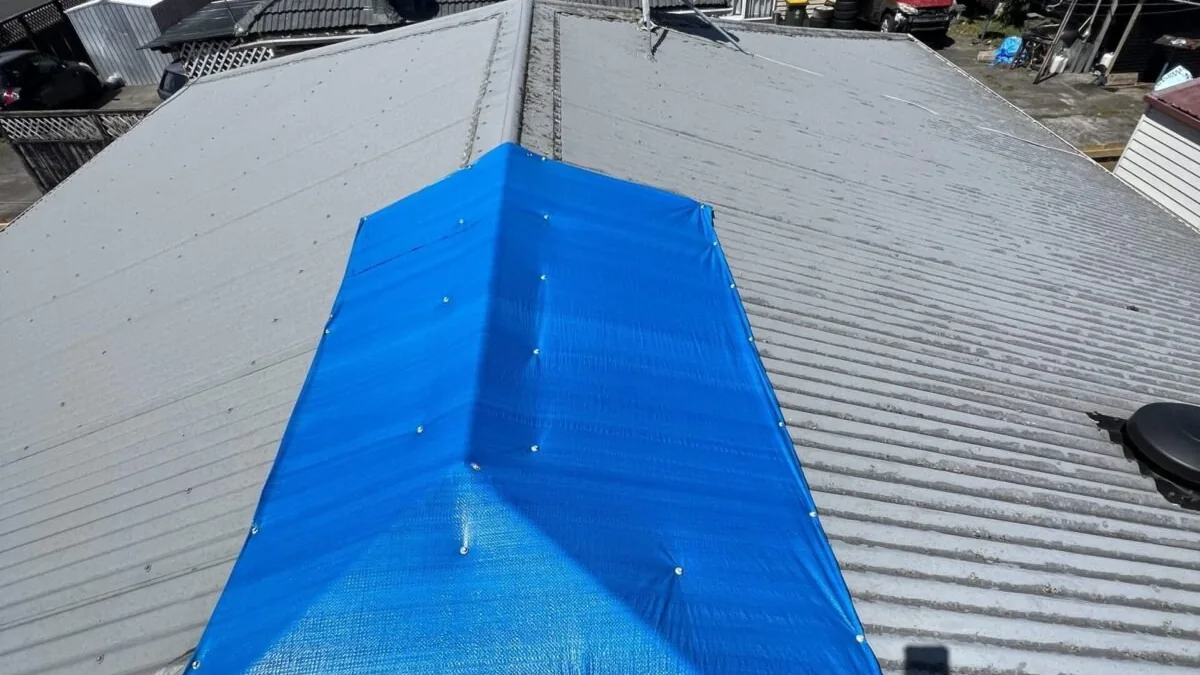
For urgent call-outs, our sister brand runs an emergency roof repair service across Auckland and lists temporary weatherproofing from $300.
How do you reduce the chance of a repeat leak?
Regular washing, clear drainage and controlling who else goes onto the roof make repeat leaks far less likely.
- Keep gutters and valleys clear. Blocked drainage sends water under the roof edge.
- Control penetrations. Aerials, solar and air conditioning fixings cut by other trades need flashing kits and should not be left as bare holes.
- Clean and treat the roof on a schedule. Moss and debris hold moisture against tile and coatings.
- Get the roof inspected after severe weather. Photograph it as well, so damage can be dated if a claim follows.
Seasonal timing is covered in how to prepare your roof for winter, and tile-specific repairs in concrete tile roof restoration.
Sources
These are the primary New Zealand sources behind the facts in this guide.
Conclusion
Roof leaks are almost always a junction, fixing or drainage problem, not a mystery. Find the entry point rather than the stain, repair the cause, and ask for an honest view on whether the rest of the roof is reaching the end of its life.
Frequently Asked Questions
Can a roof leak with no visible damage?
Yes. Wind-driven rain can get past a lap or flashing that looks fine from the ground, and the water may only show after it has travelled along timber or underlay. A roof-space inspection often finds the evidence a ground check misses.
Why does my roof only leak in strong wind and rain?
Wind pushes rain sideways and up under laps, flashings and tile edges that shed water normally. Underlay is the secondary barrier that catches that water, so leaks that only appear in storms often point to a failed junction or worn underlay.
Is moss a cause of roof leaks?
Moss holds moisture against the surface, speeds coating breakdown on steel and erodes concrete tile. Clumps also break loose and block gutters and downpipes, which can send water back under the roof edge. It is a contributor more than a direct cause.
Should I patch a leak with sealant myself?
A temporary seal can slow water while you arrange a repair, but it rarely fixes the cause and often hides it. Sealant over a failing flashing or rusted lap tends to crack again, and working on the roof is a fall risk.
Roofing Help Across Auckland
Reading up is a smart first step, but every Auckland property is a little different. For advice tailored to your own home, My Homes Construct Ltd offers free assessments and written quotes for roofing and re-roofing across all Auckland regions and suburbs.
We respond to enquiries the same business day, explain your options in plain language, and stand behind every job with a workmanship warranty — no pressure and no hidden costs.
When to Call a Professional
Plenty of roofing and re-roofing tasks are fine to tackle yourself, but it's worth knowing where the line is. If a job involves working at height, structural elements, water getting where it shouldn't, or anything you're not fully confident about, bringing in a professional is usually cheaper than fixing a DIY attempt that didn't hold up.
A good tradesperson also spots the things an untrained eye misses — the early warning signs that turn a small job today into a major repair next winter. If you're in any doubt, a free assessment costs nothing and gives you a clear, honest picture before you commit to anything.
Timing It Right in Auckland
One thing worth keeping in mind with roofing and re-roofing in Auckland is how much the seasons shape the right approach. Coastal exposure, humidity and sudden downpours all affect both the work itself and how long the result lasts, so the best time to act isn't always obvious from the kerb.
Booking early in the season also means more flexibility on dates and fewer surprises. We're happy to map out sensible timing with you at no cost, so the job lands when conditions — and your budget — are right.
A Quick Checklist for Auckland Homeowners
Whatever you decide to do next, a few simple principles will save you money and stress on any roofing and re-roofing job in Auckland.
- Act early — Auckland's wet, humid climate turns small problems into expensive ones faster than most people expect.
- Get it in writing — a clear, itemised written quote protects you and makes comparing options straightforward.
- Check it's a registered building company — it matters for quality, consent and warranty cover.
- Ask about the warranty — reputable Auckland tradespeople stand behind their workmanship, not just the materials.
- Think long-term value, not just the cheapest price — the lowest quote is rarely the best value once durability is factored in.
Keep these in mind and you'll avoid the most common — and most costly — mistakes we see on Auckland properties.
Need Professional Help in Auckland?
My Homes Construct Ltd provides expert roofing and full home-improvement services across all Auckland suburbs. Get a free, no-obligation quote today.
This guide is published by Auckland construction and home renovation company — a registered Auckland building company covering gutters, roofing, renovation, painting, decks and civil construction.