
Roof Flashing in NZ: Types, Common Failures and How Flashing Repairs Work
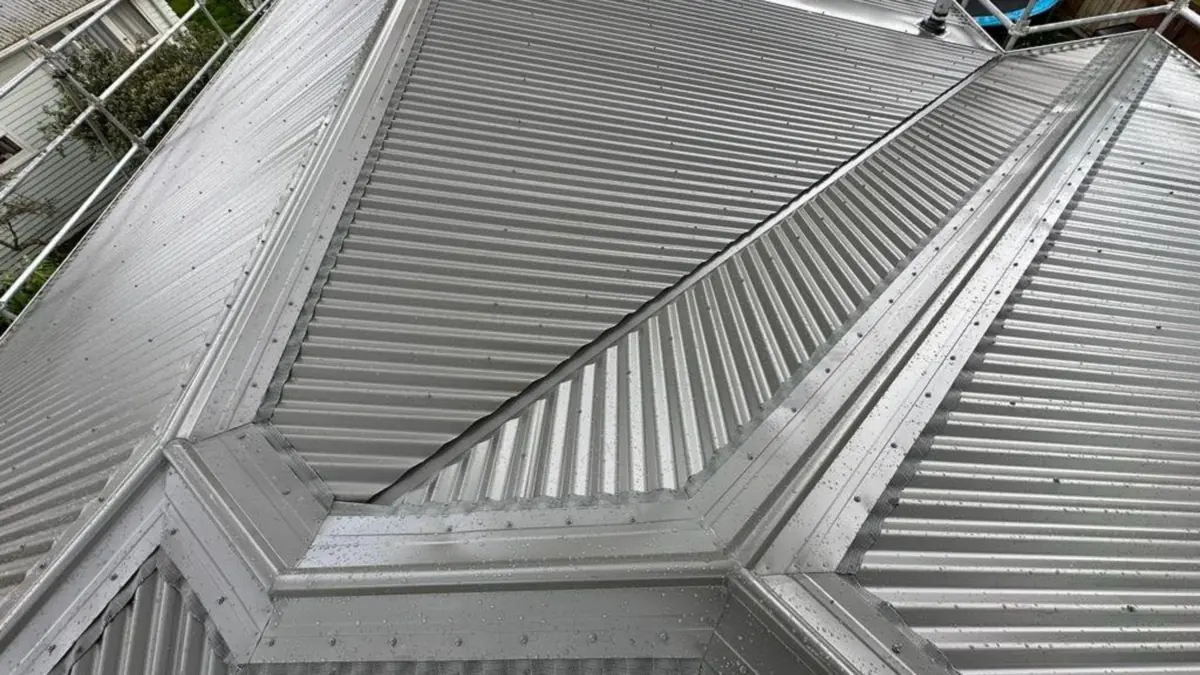
Quick answer: Roof flashing is the shaped metal or membrane that seals every junction where roof planes, walls and penetrations meet, so water runs off instead of in. Most roofs leak at a junction, not through a sheet or tile. That makes the flashing the first thing to check when a roof leaks, and the first thing to renew in a re-roof.
This guide names the main flashing types, explains the common failures and shows how to tell a flashing repair from a bigger job.
What does roof flashing actually do?
Roof flashing guides water away from the joints in a roof, which are the places where a flat sheet or tile cannot do the job alone.
A roofing sheet or tile sheds water well across its surface. Trouble starts where the roof meets a wall, where two slopes meet in a valley, along the ridge and around every pipe, flue and aerial that passes through it. Flashings cover each of those details. When a flashing lifts, corrodes or is bridged with sealant, water finds the gap, and the leak is often metres away from where it enters.
What are the main types of roof flashing?
The main types are named for where they sit on the roof, and a typical house uses several of them.
| Type | Where it sits | What it does |
|---|---|---|
| Ridge | Along the top of the roof | Covers the join where two slopes meet at the apex |
| Barge | Along the sloping edge of a gable roof | Finishes the roof edge and keeps wind-driven rain out |
| Apron | Where a roof meets the base of a wall | Directs water away from the wall junction |
| Valley | In the angle between two roof planes | Carries the combined runoff down to the gutter |
| Chimney and wall abutments | Around chimneys and rising walls | Seals every side of the penetration |
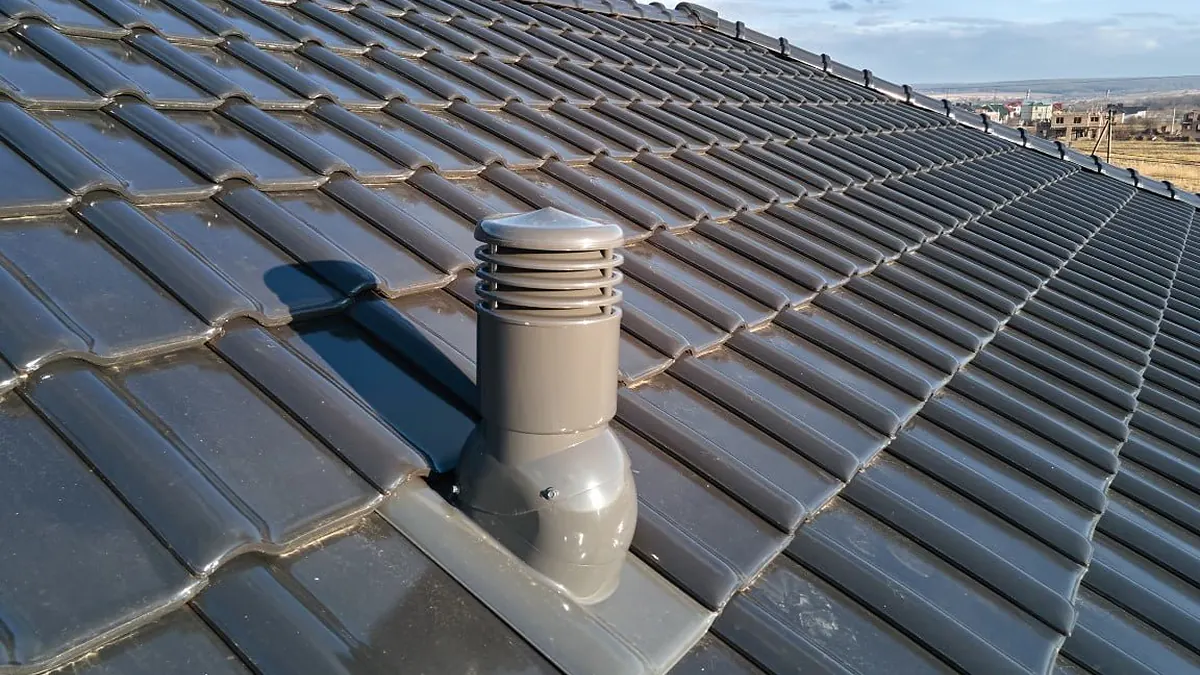
| Penetration | Around vents, flues, aerials and solar fixings | Seals the hole the pipe or bracket makes |
| Eaves | At the gutter line | Controls water leaving the roof edge into the gutter |
On a re-roof, every flashing should be new and named in the quote, because reusing tired flashings is a common way for a new roof to still leak.
On tile roofs the ridge and hip pointing is closely related to flashing, which is covered in concrete tile roof restoration, and roof leak causes shows how junction failures show up inside the house.
Why do roof flashings fail?
Flashings fail for a handful of repeat reasons, and most of them come down to movement, corrosion and shortcuts.
- Movement. Roofing expands and contracts with temperature, which is most evident with darker colours and long spans, and fixings can loosen.
- Corrosion. Rust at laps and fixings, or incompatible metals in contact, eats through the material.
- Sealant doing the flashing’s job. Sealant dries, shrinks and cracks, so a joint that relies on it will leak again.
- Poor detailing at installation. Missed turn-ups, short laps and surface fixings through the weather face leave a path for water.
- Debris and ponding. Leaves and dirt that stay wet against the metal speed up corrosion.
- Later trades. Aerial, solar and air-conditioning fixings cut new holes that are not always flashed properly.
Corrosion at laps and fixings is covered in rusty roof repair.
How can you spot a failing flashing from the ground?
You can spot many failing flashings from the ground with binoculars, because the signs show on the edges and the walls below.
- Lifted or open edges. A gap or an edge that stands proud of the roof.
- Rust streaks. Orange staining below a flashing or fixing line.
- Cracked or smeared sealant. Blobs of sealant often mark a past quick fix.
- Staining on walls or soffits. Water marks below a junction show where it has been running.
If you see any of these, our roof leak causes guide helps you rank them, and our roof leak repair service traces the source, and the emergency checklist covers what to do if water is coming in.
Can a flashing be repaired, or does it need replacing?
A flashing can be repaired when the metal is sound and only the fixing, lap or sealing detail has failed; it should be replaced when the metal itself is corroded or the detail was never right.
The test is simple. If a roofer can re-fix, re-lap or re-seal a flashing with a proper mechanical detail, repair is reasonable. If the metal is thin, holed or rusted along the line, patching only hides it for a season. Where several flashings on one roof are failing, the roof is usually reaching the end of its service life and a repair-versus-replace conversation is due.
Our sister brand’s tile roofing service handles ridge re-pointing, tile replacement and flashing repairs on concrete and clay tile roofs.
How are flashings fixed on a steel roof?
On a steel roof, flashings are fixed mechanically to the structure and sealed at the laps, not just stuck down with sealant.
The metal roofing manufacturers’ installation guide says the edges of all roof planes should be sealed with a flashing, and that a flashing should be fastened between 25 mm and 50 mm from its edge, with the primary fasteners no more than 600 mm apart. Rivets on flashings are placed at 50 mm centres. Where there is no structural member to fix to, fasteners go in at a maximum of 200 mm centres. It also says fasteners and accessories should be colour matched and painted before installation, and that sheeting and flashings should come from the same manufacturer so they weather alike.
These are the details to ask about when you compare quotes, because they separate a mechanically sound flashing from one that relies on sealant.
Does flashing work need building consent?
Repairing or replacing a flashing with a comparable product in the same position is generally exempt from building consent, but the work still has to keep the building weathertight.
Schedule 1 exempts repair and maintenance using comparable materials, and like-for-like replacement in the same position. Restricted building work is a separate category: it applies only to work that both requires a building consent and affects weathertightness, which includes cladding junctions and flashings, and it must be done or supervised by a Licensed Building Practitioner. An exempt flashing repair is therefore not restricted building work, but a new roof or cladding job that needs consent is. The exempt-work guidance and the LBP register are listed under Sources, and our roof replacement consent guide covers the larger jobs.
Sources
These are the primary New Zealand sources behind the facts in this guide.
Conclusion
Roof flashing is a small part of a roof that decides whether the whole roof stays dry. Check the junctions first when something leaks, insist on new flashings in any re-roof, and treat sealant as a temporary measure, not a detail.
Frequently Asked Questions
Why do roofers talk so much about flashings?
Because most roofs do not leak through the middle of a sheet. They leak at junctions, and flashings handle every junction: ridge, barge, apron, valley, penetration and wall abutment. A roof is only as watertight as its flashings.
Can I seal a flashing with silicone myself?
Sealant can slow a leak briefly, but it dries, shrinks and cracks, and it hides the real cause. Working at a roof edge is also a fall risk. Treat sealant as a stopgap while a roofer re-fixes or replaces the flashing properly.
How much does a flashing repair cost?
Most residential roof repairs sit between $150 and $1,800. A single lifted flashing is at the lower end, and multiple leak points, valley replacement or work needing edge protection sits higher. Quote the repair separately from replacement so you can compare.
Are flashings replaced during a re-roof?
They should be. Every flashing on a re-roof should be new and named in your quote, because reusing old flashings under a new roof is the most common way a new roof still leaks. Ask for flashings to be itemised.
Roofing Help Across Auckland
Need a hand putting this into practice? My Homes Construct Ltd delivers roofing and re-roofing services throughout Auckland, from the North Shore through to South Auckland, with the local knowledge to get the details right the first time.
Get in touch for a free, no-obligation quote. You'll deal with the same registered building company team across your whole project, with quality materials and a workmanship warranty as standard.
When to Call a Professional
The trickiest part of any roofing and re-roofing project is often knowing when to stop and call someone in. Warning signs worth taking seriously include recurring problems, damage that keeps spreading, anything involving safety or access at height, and work that touches the structure of your home.
In those situations a professional opinion pays for itself. We're always happy to take a look and tell you straight whether it's something you can manage yourself or a job better left to a registered building company — with no obligation either way.
Timing It Right in Auckland
Timing matters more than most Auckland homeowners realise with roofing and re-roofing work. The drier spells from late spring through summer are ideal for anything weather-sensitive, while the wetter winter months are when hidden faults tend to reveal themselves — which makes autumn a smart time for a preventative check before the rain sets in.
Planning ahead also means you're not scrambling for an emergency call-out at the worst possible moment. A quick seasonal inspection costs little and often catches the small issues that would otherwise become urgent — and expensive — repairs once Auckland's weather turns.
A Quick Checklist for Auckland Homeowners
Whatever you decide to do next, a few simple principles will save you money and stress on any roofing and re-roofing job in Auckland.
- Act early — Auckland's wet, humid climate turns small problems into expensive ones faster than most people expect.
- Get it in writing — a clear, itemised written quote protects you and makes comparing options straightforward.
- Check it's a registered building company — it matters for quality, consent and warranty cover.
- Ask about the warranty — reputable Auckland tradespeople stand behind their workmanship, not just the materials.
- Think long-term value, not just the cheapest price — the lowest quote is rarely the best value once durability is factored in.
Keep these in mind and you'll avoid the most common — and most costly — mistakes we see on Auckland properties.
Need Professional Help in Auckland?
My Homes Construct Ltd provides expert roofing and full home-improvement services across all Auckland suburbs. Get a free, no-obligation quote today.
This guide is published by the My Homes Construct Ltd home page — a registered Auckland building company covering gutters, roofing, renovation, painting, decks and civil construction.